

Gallery
From Agincourt to Gettysburg, from the Ardennes to Stalingrad, B.G. Koch has long been drawn to history’s decisive battles. That interest extends beyond reading and research into hands-on craft: painting individual figurines and building detailed, handmade set pieces that bring these moments to life. The following showcase highlights a selection of battles realized through his meticulous miniature work and enduring fascination with military history.
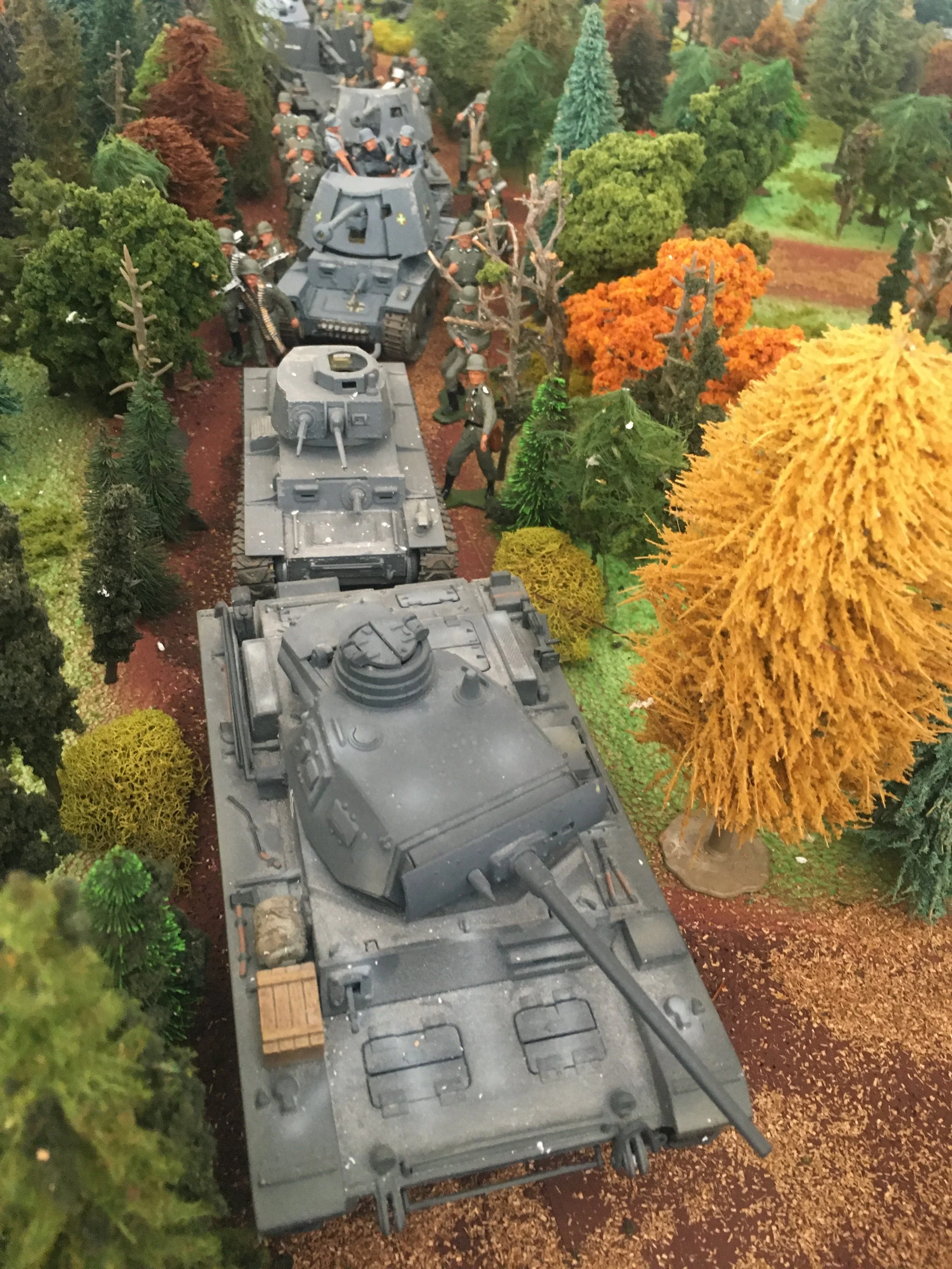
German armor pushes through the dense Ardennes forest—an armored column threading its way toward the Western Front’s breaking point.
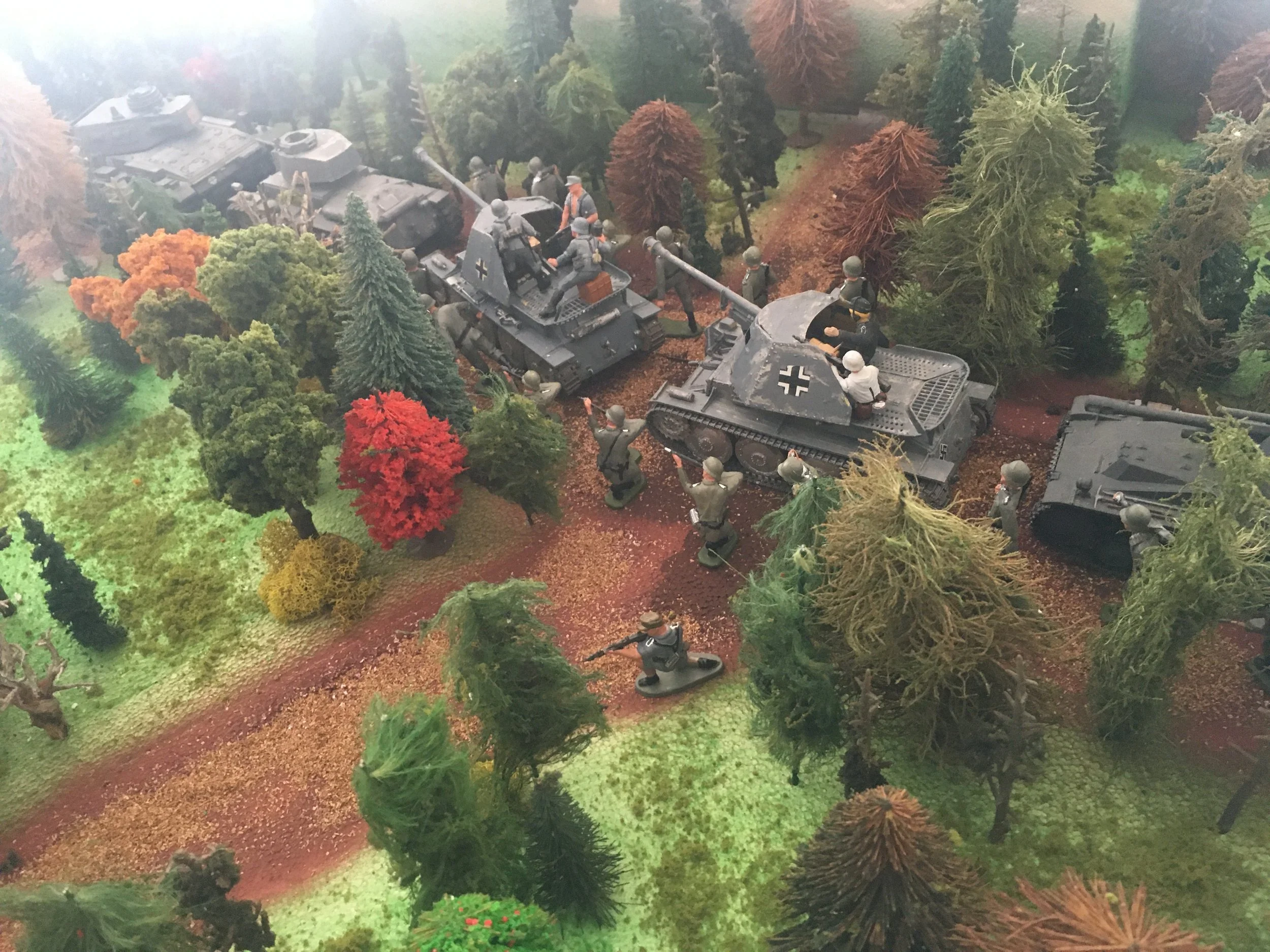
Panzer columns advance under autumn canopy, the calm before the storm that would become the Battle of the Bulge.
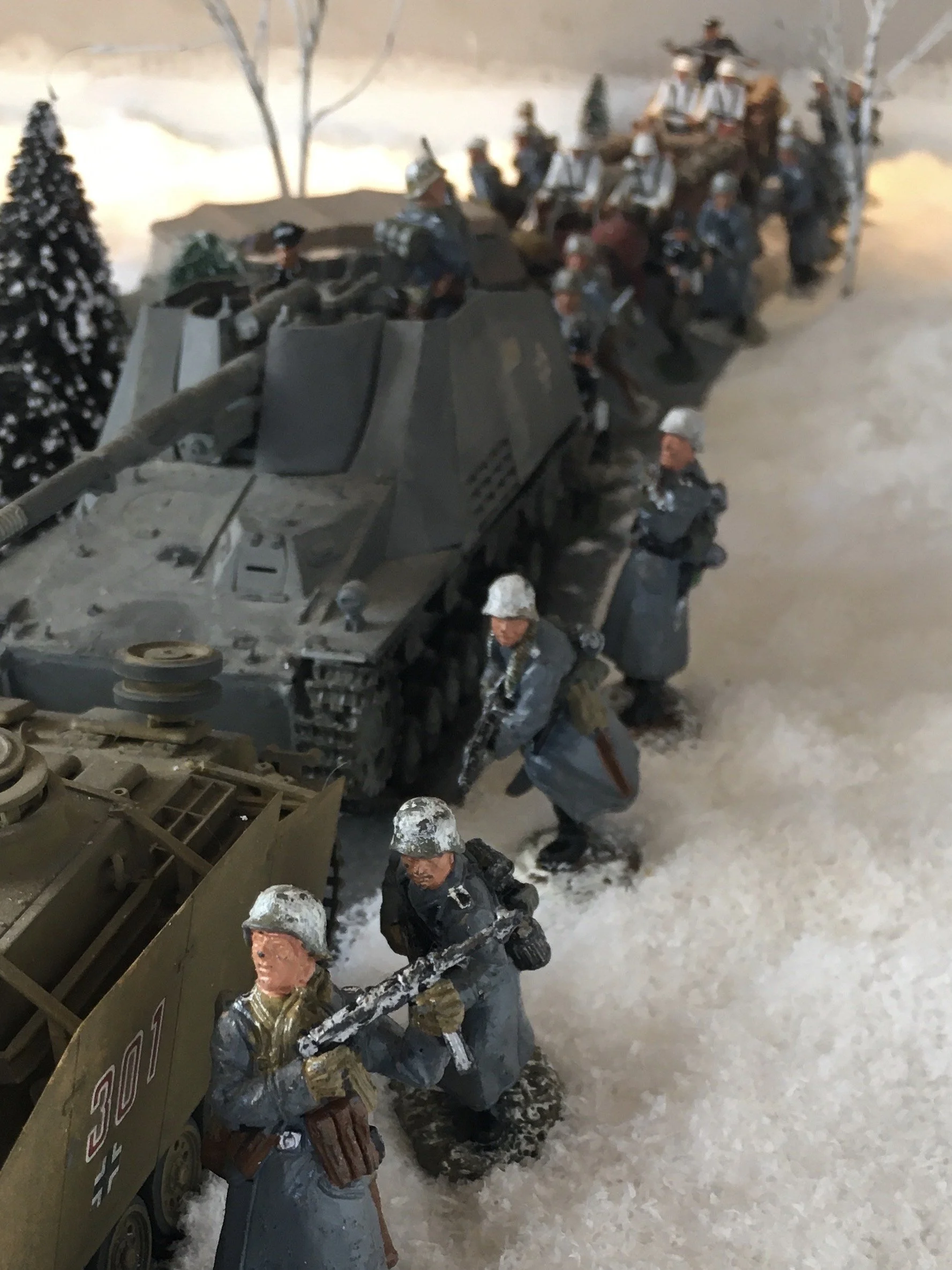
German spearhead tanks rumble down frozen forest roads—fifteen miles from Moscow and running out of time.
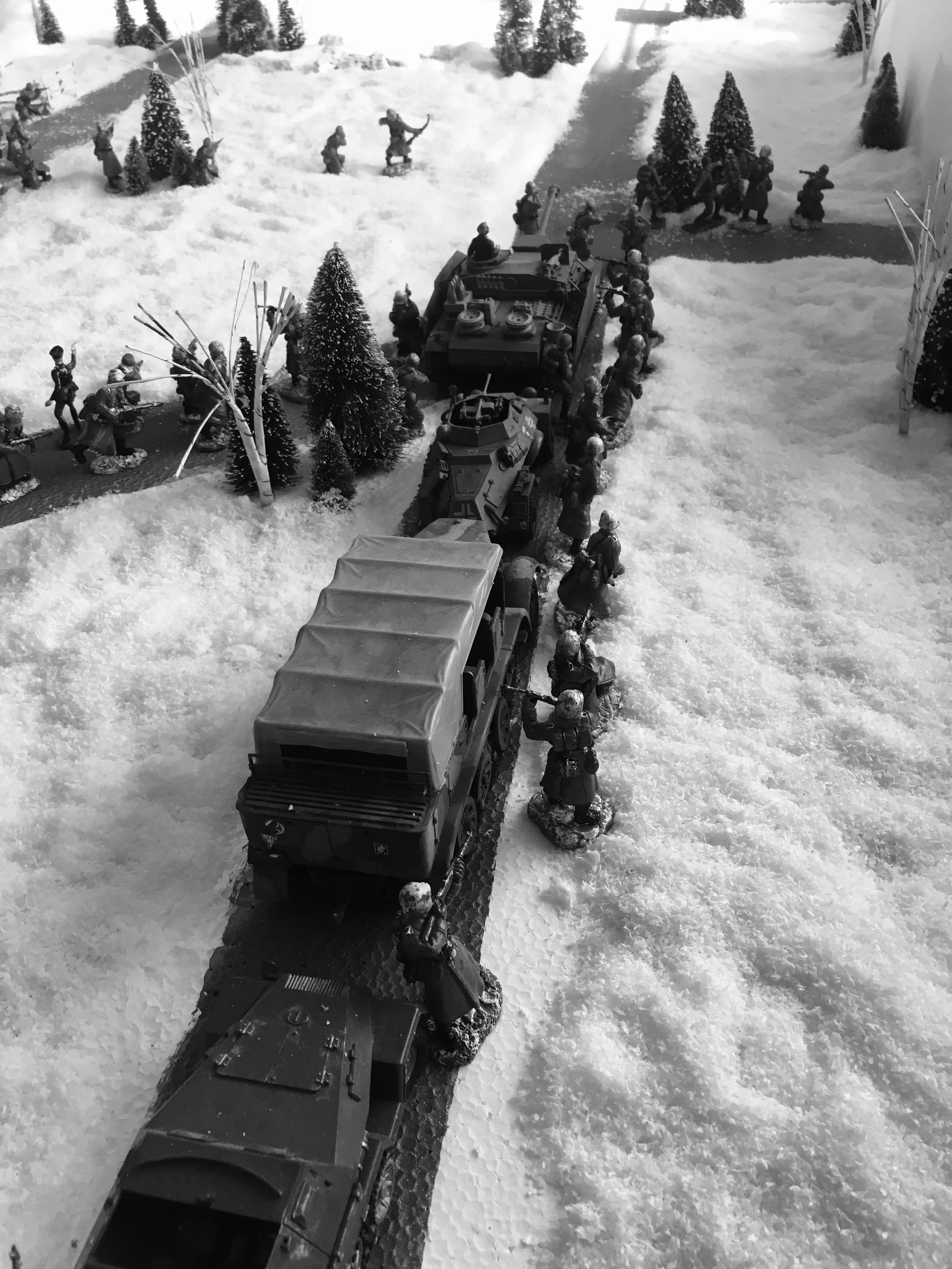
Infantry and armor converge on the Soviet capital, engines straining in subzero air, supply lines stretched to the limit.
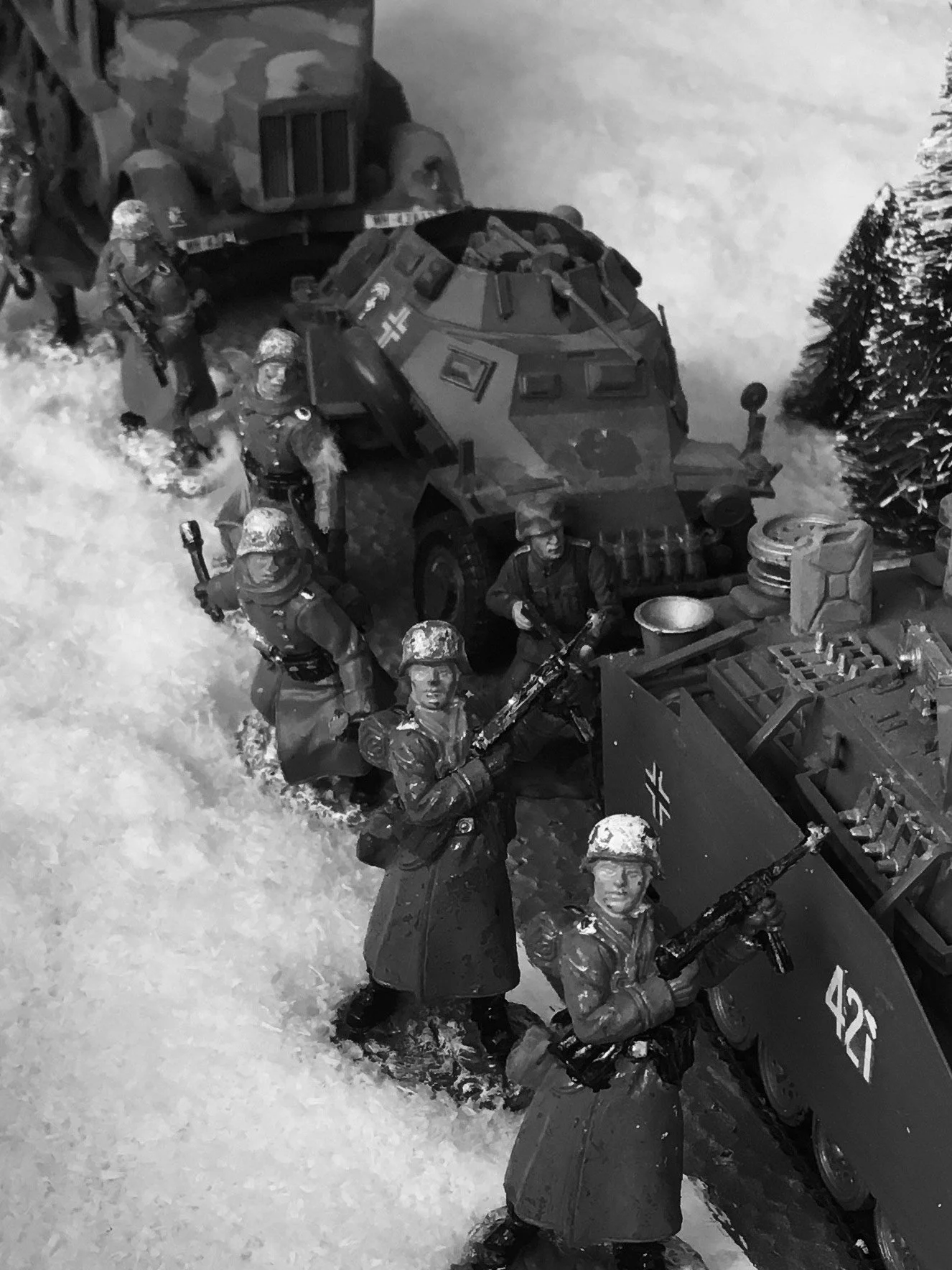
Exhausted soldiers trudge east through deepening snow—momentum fading with each frozen mile.
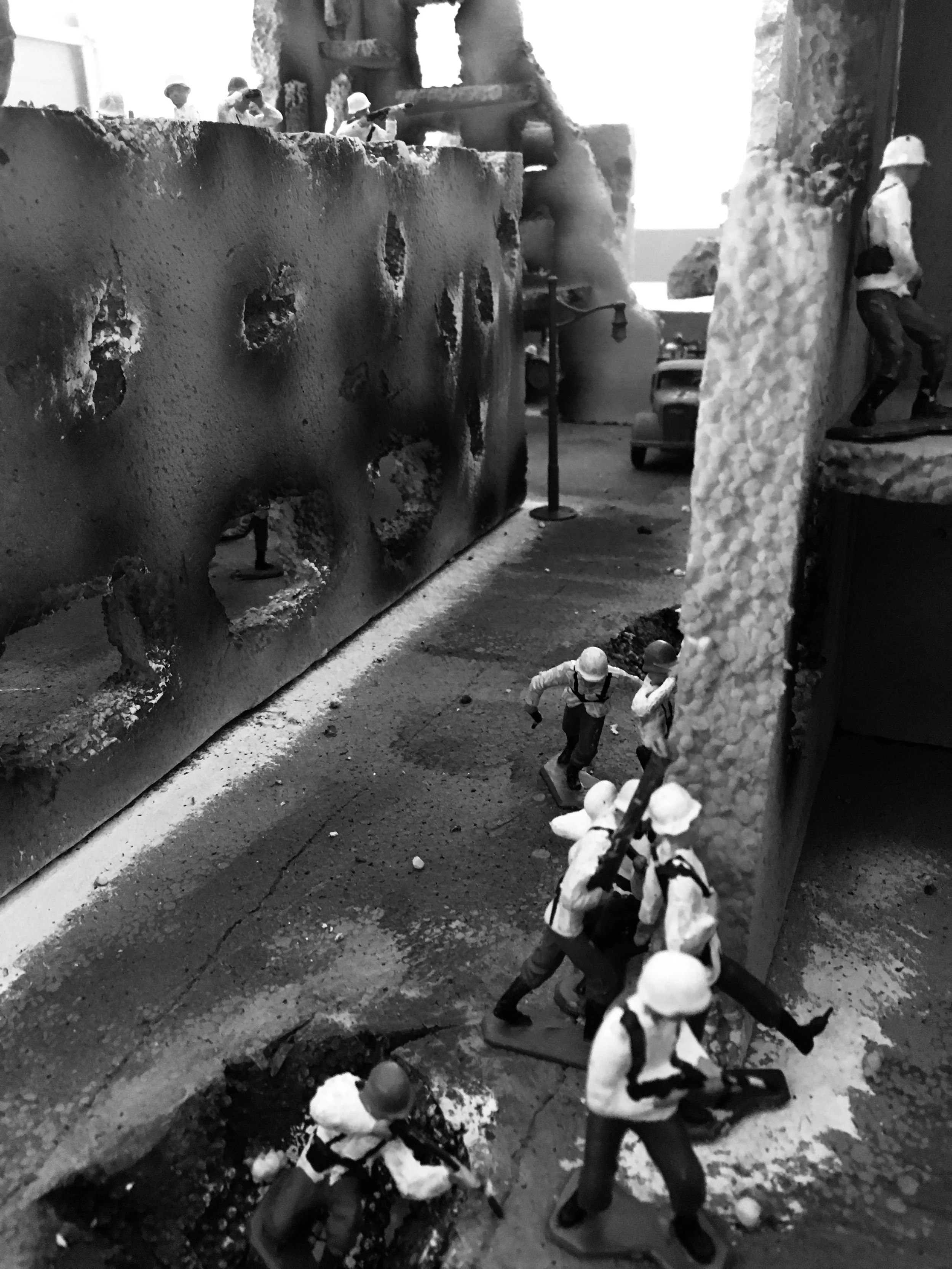
Urban warfare engulfs the ruins of Stalingrad—German infantry fighting block by block through shattered concrete and smoke.
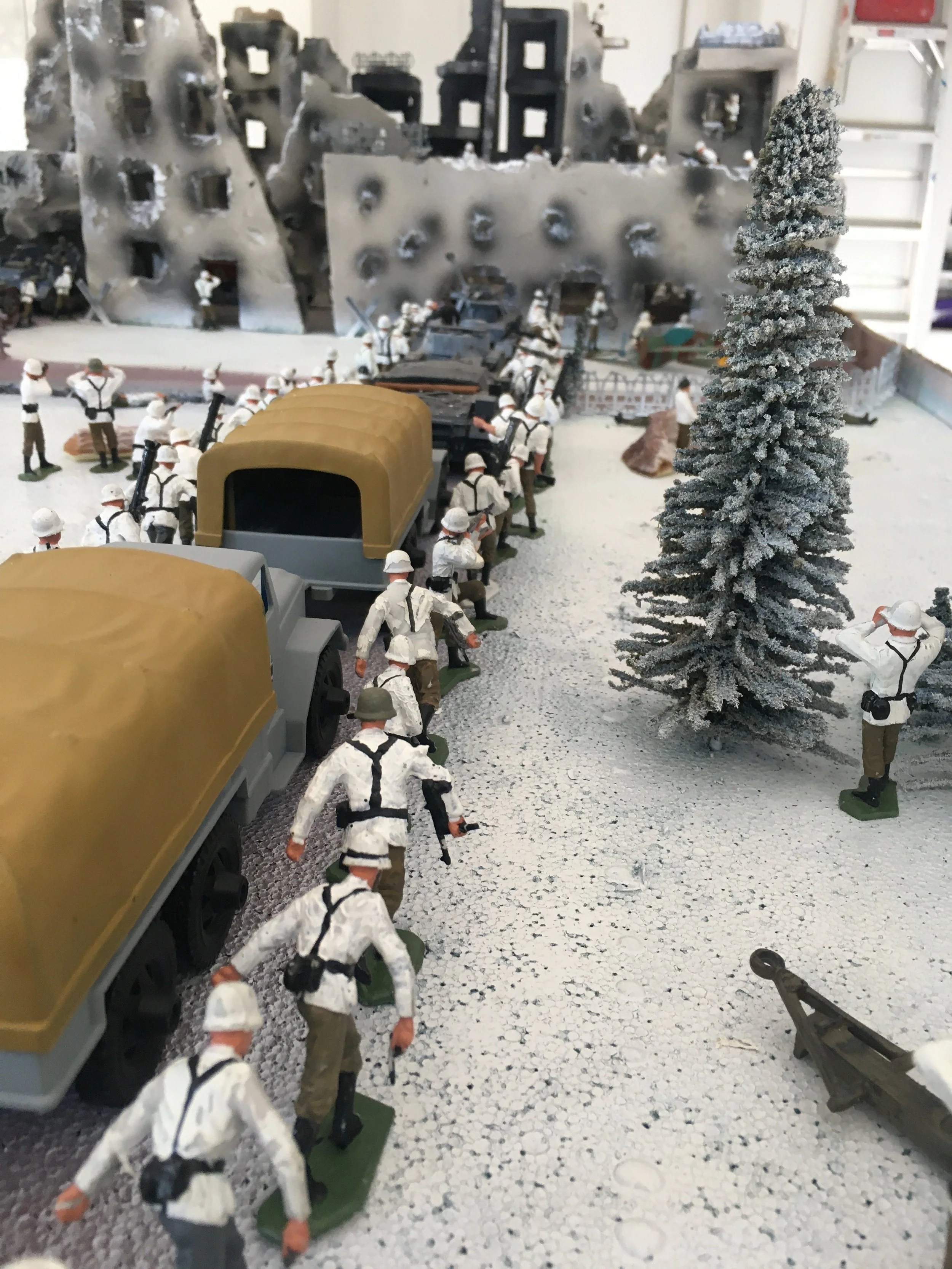
Amid wreckage and snow, Axis troops push into the industrial heart of the Volga—one street at a time.
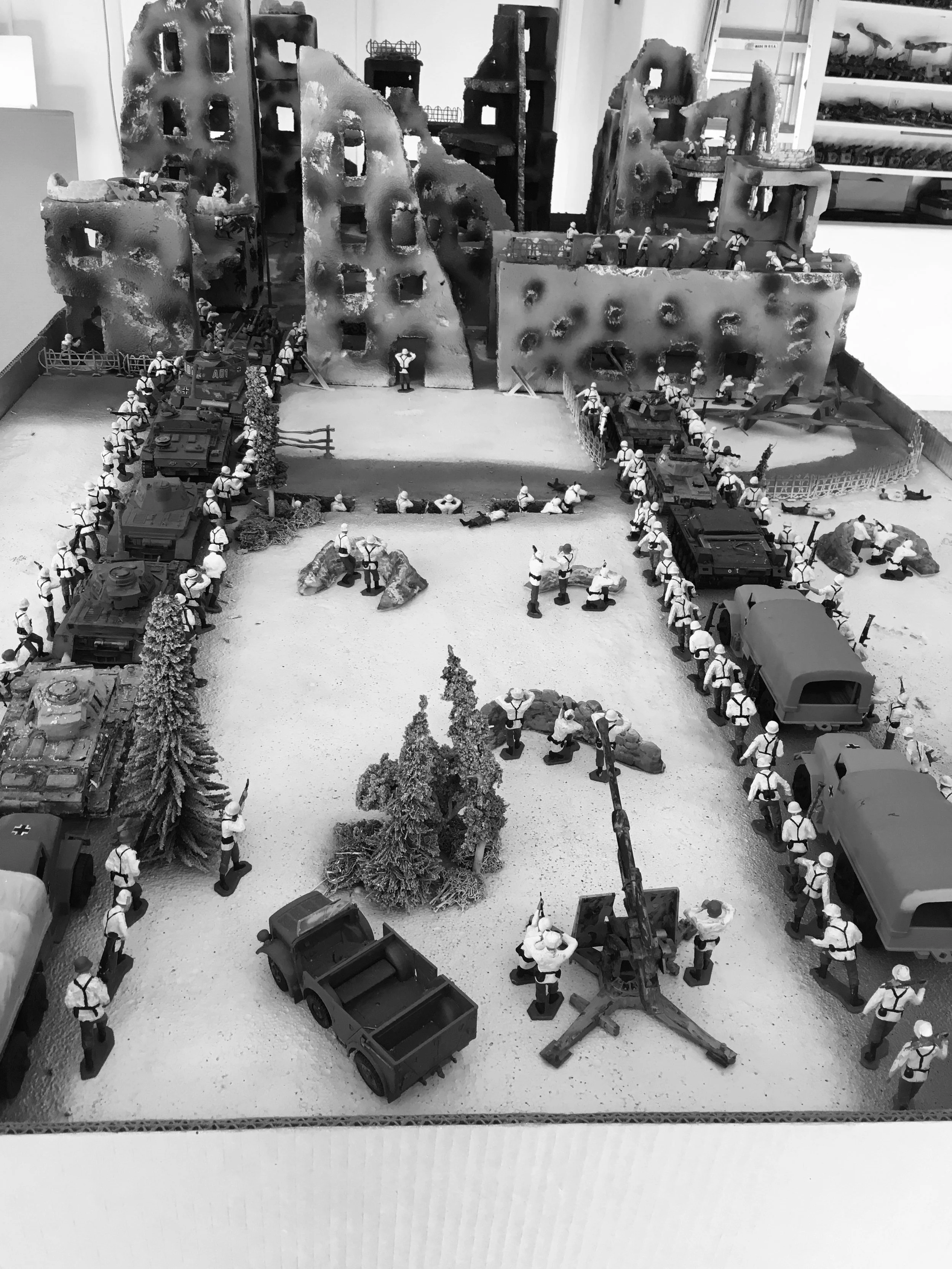
Encircled and starving, the remnants of the Sixth Army hold their ground in Stalingrad’s ruins—the turning point of the war.
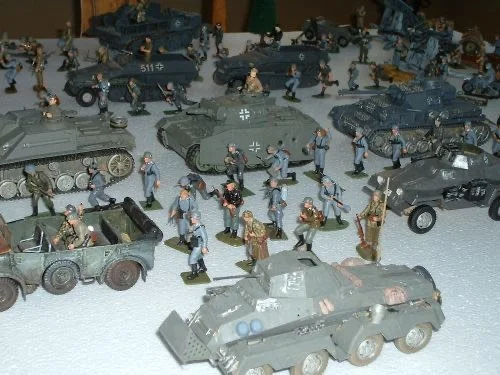
Armored columns grind forward through the frozen steppe, infantry clinging to steel as winter locks the front in place.
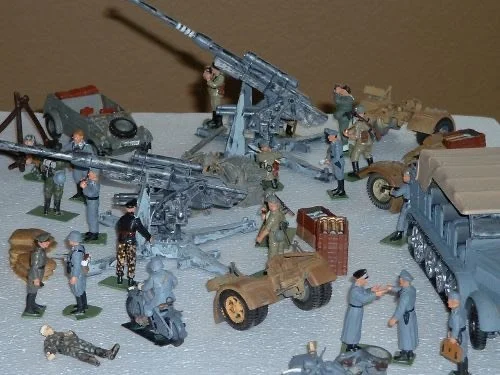
Heavy guns stand silent between barrages, crews stamping their feet and waiting for the next fire mission in the cold.
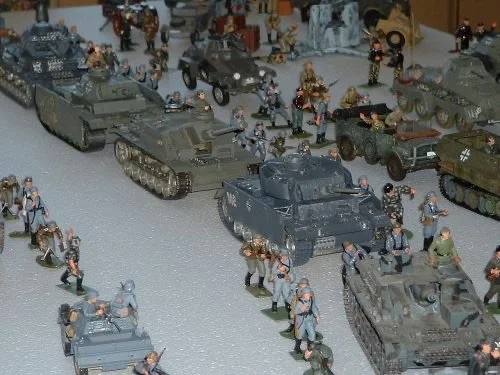
Panzers and halftracks crowd the approaches, stalled by ice, exhaustion, and the narrowing streets ahead.
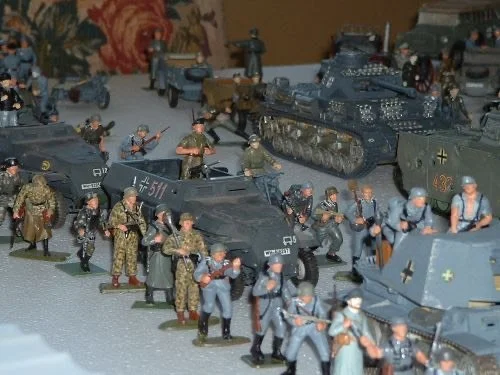
Assault troops gather at the edge of the ruins, faces hidden beneath helmets and frost, orders passed quietly hand to hand.
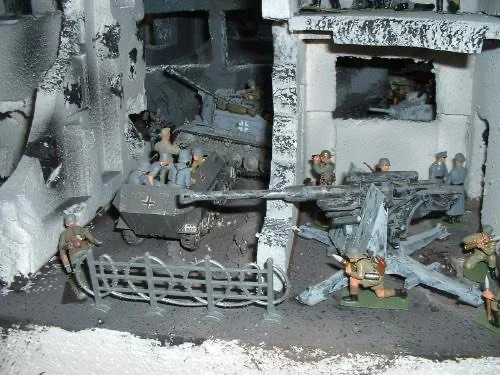
An 8.8 cm gun holds a prepared position inside the ruins, its long barrel covering the street where the enemy is expected to appear.
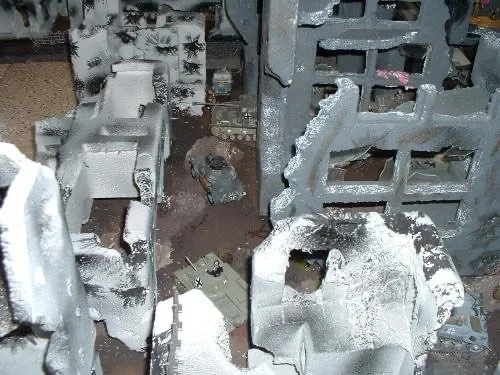
The city reduced to bones—collapsed walls, frozen rubble, and the smell of smoke trapped beneath snow.
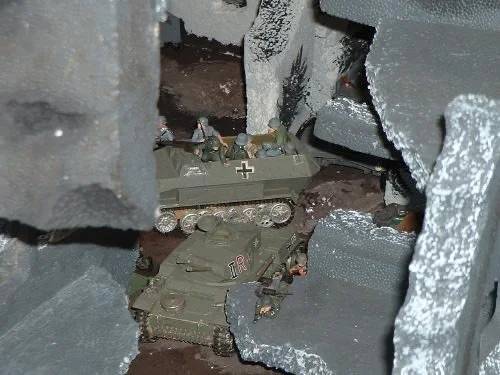
Tracked vehicles squeeze through the wreckage, scraping past walls that were once streets and homes.
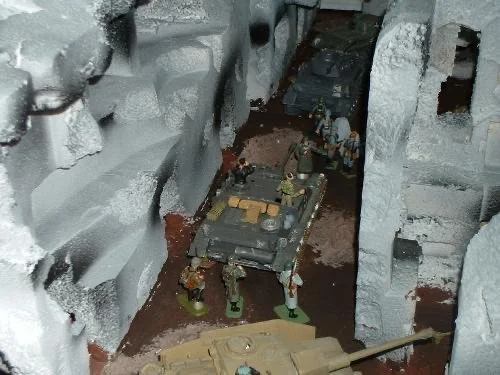
A narrow corridor of destruction—armor advances single file while infantry scan the upper floors for movement.
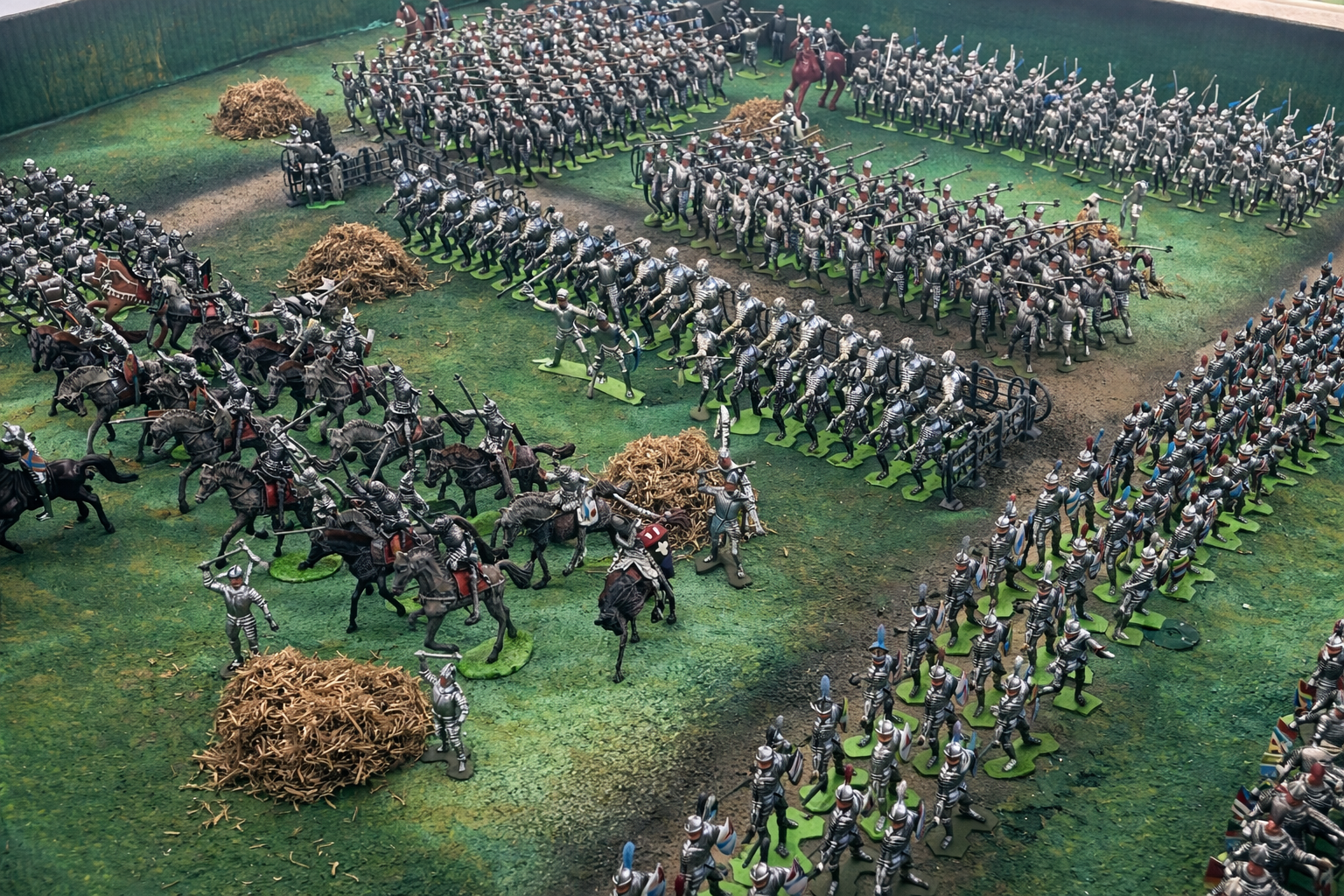
French cavalry and infantry formations mass on the field near Agincourt, moments before advancing toward the English line.
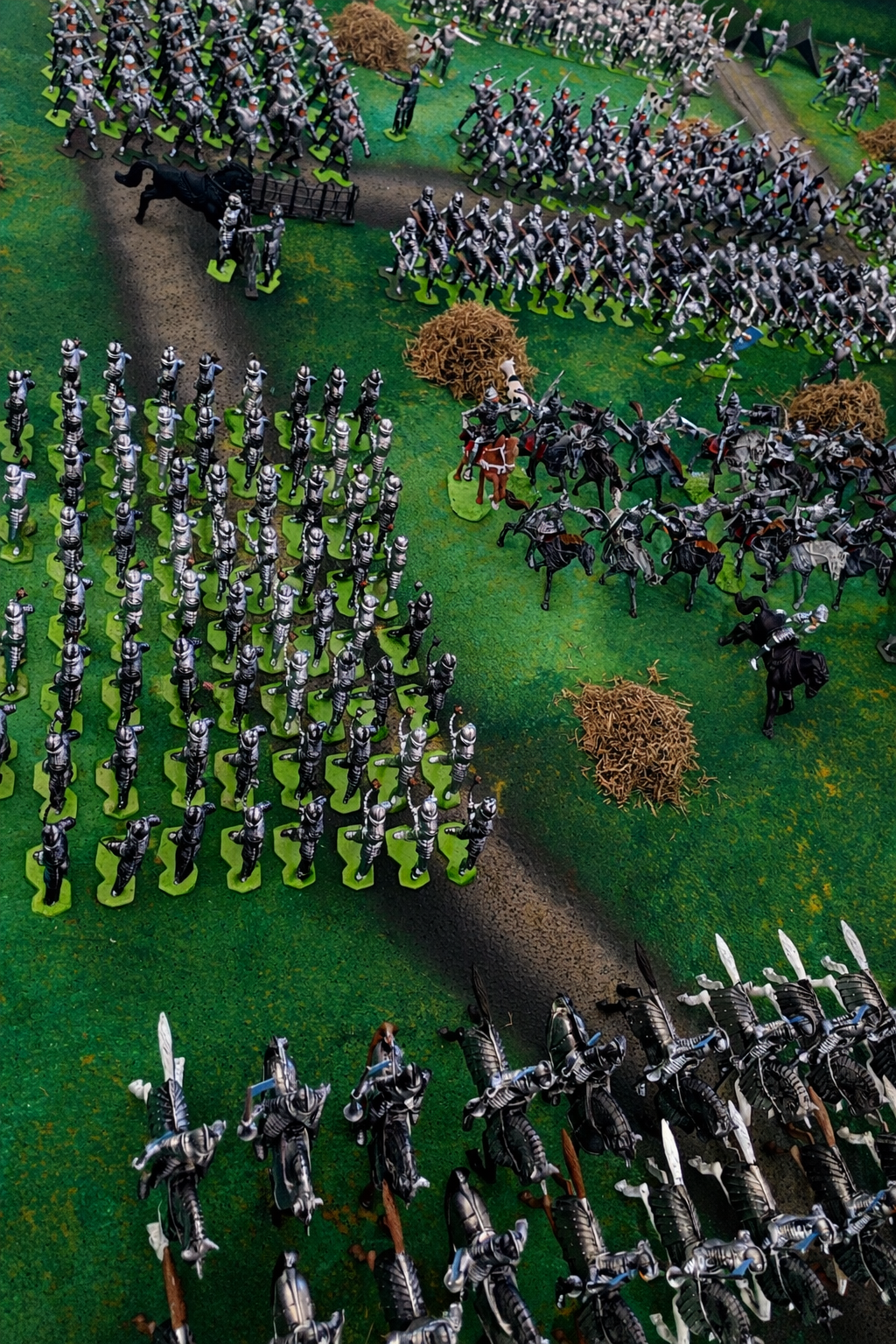
French men-at-arms look on from the rear ranks at Agincourt as the cavalry moves into position ahead of them, preparing to launch the opening assault.
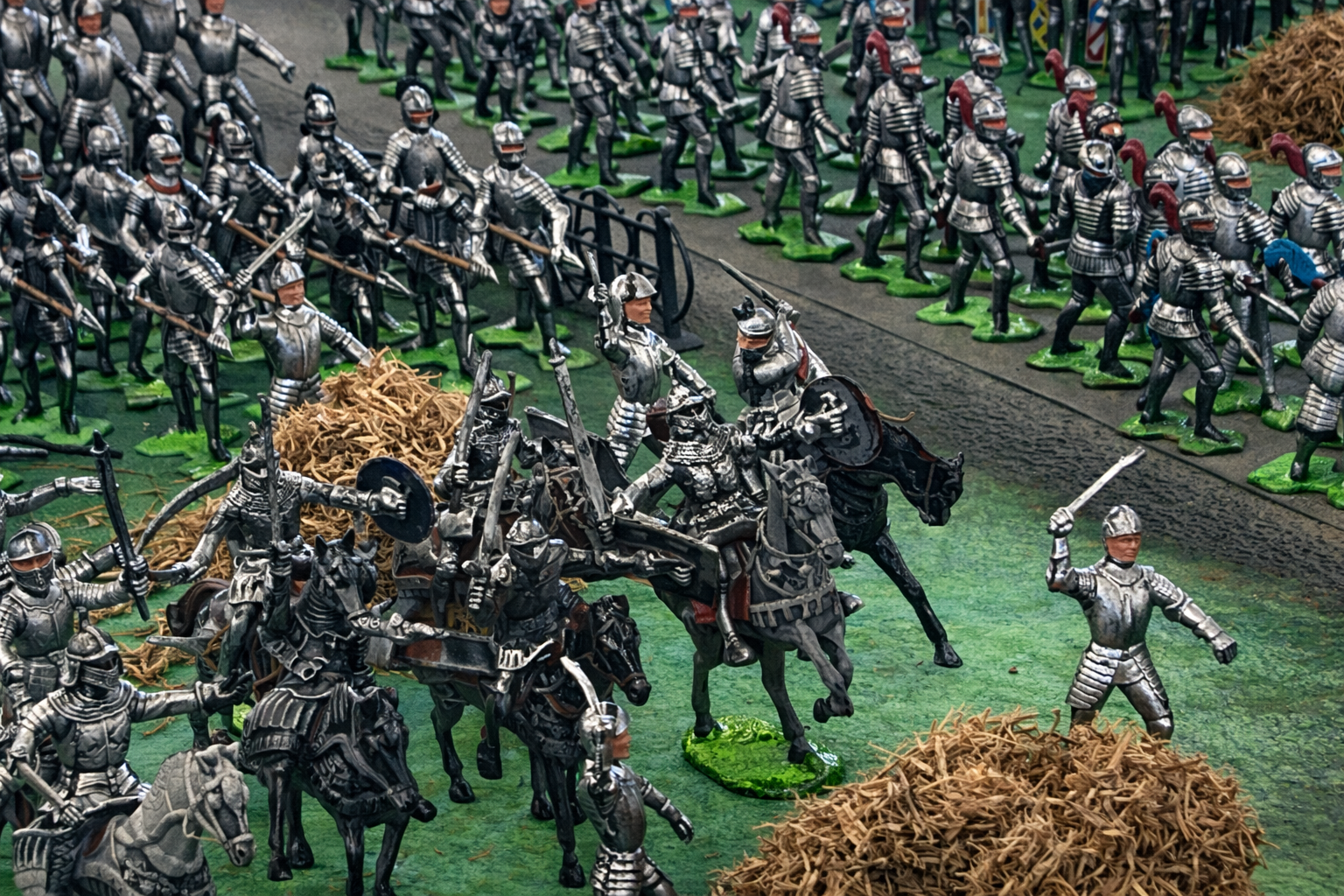
French cavalry eagerly begin their charge.
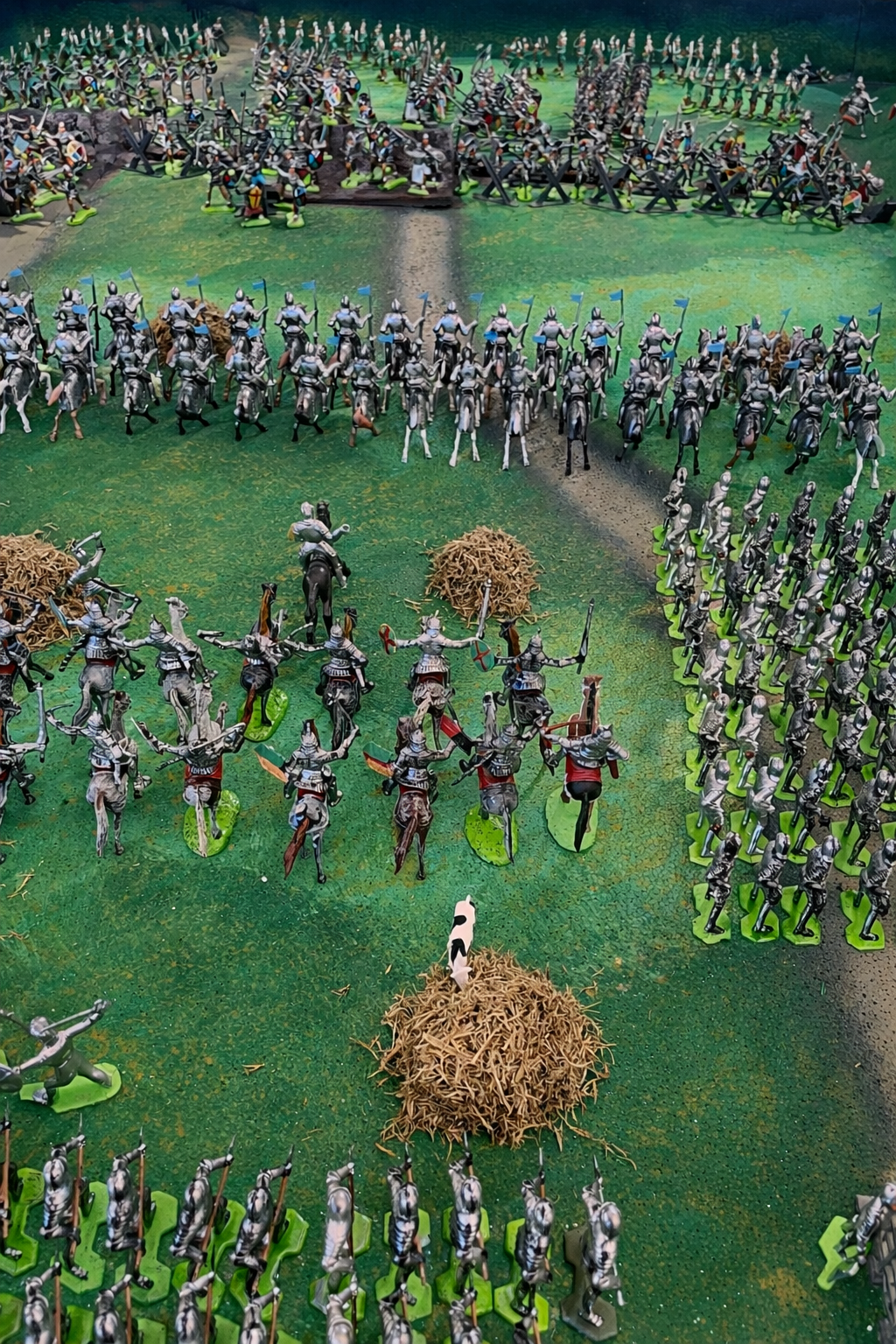
Driven by overconfidence and a hunger for battlefield glory, French nobles launch an overeager cavalry charge straight into the fortified English line.
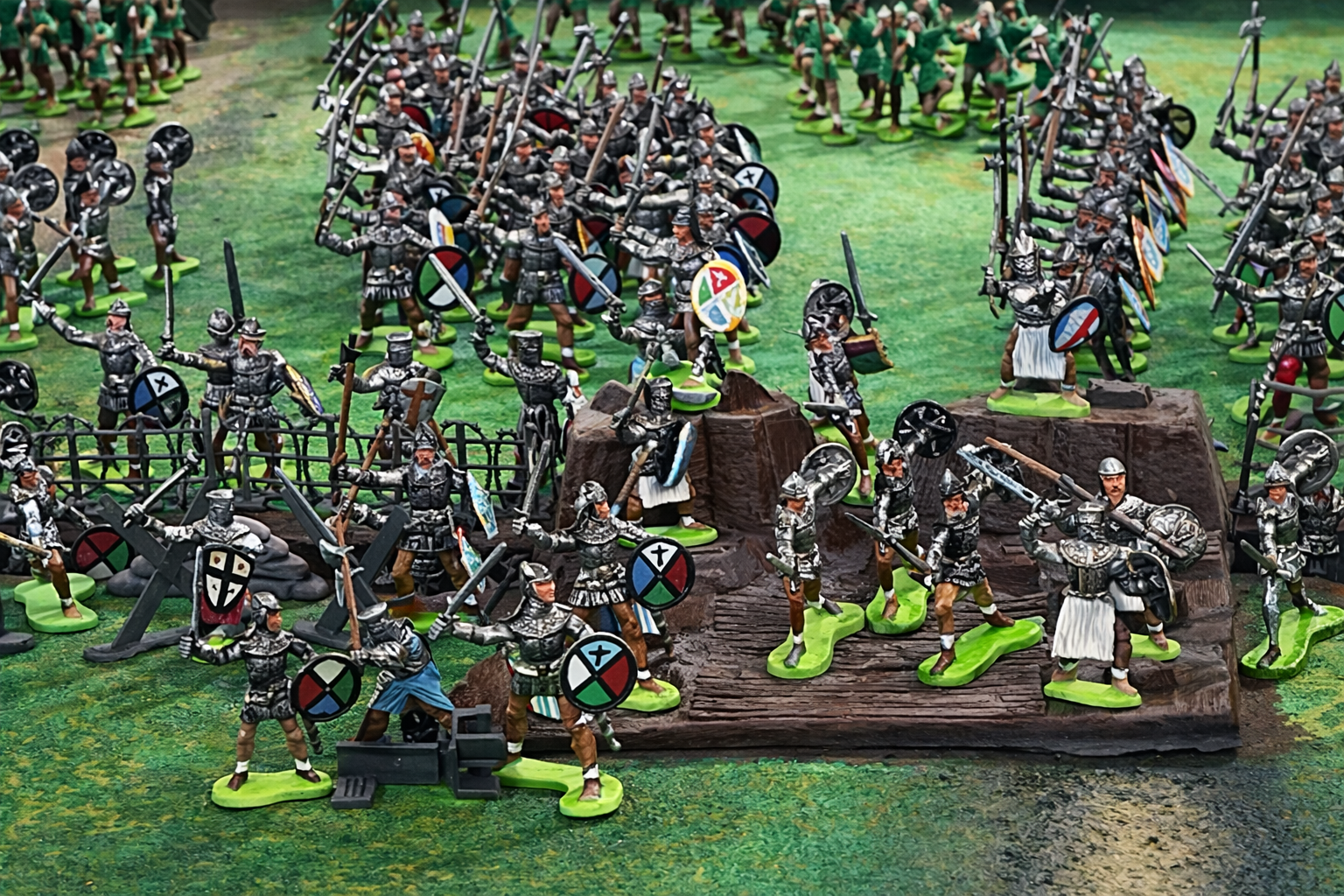
Meanwhile, the English—starving, exhausted, and ravaged by disease—know they must win or die.
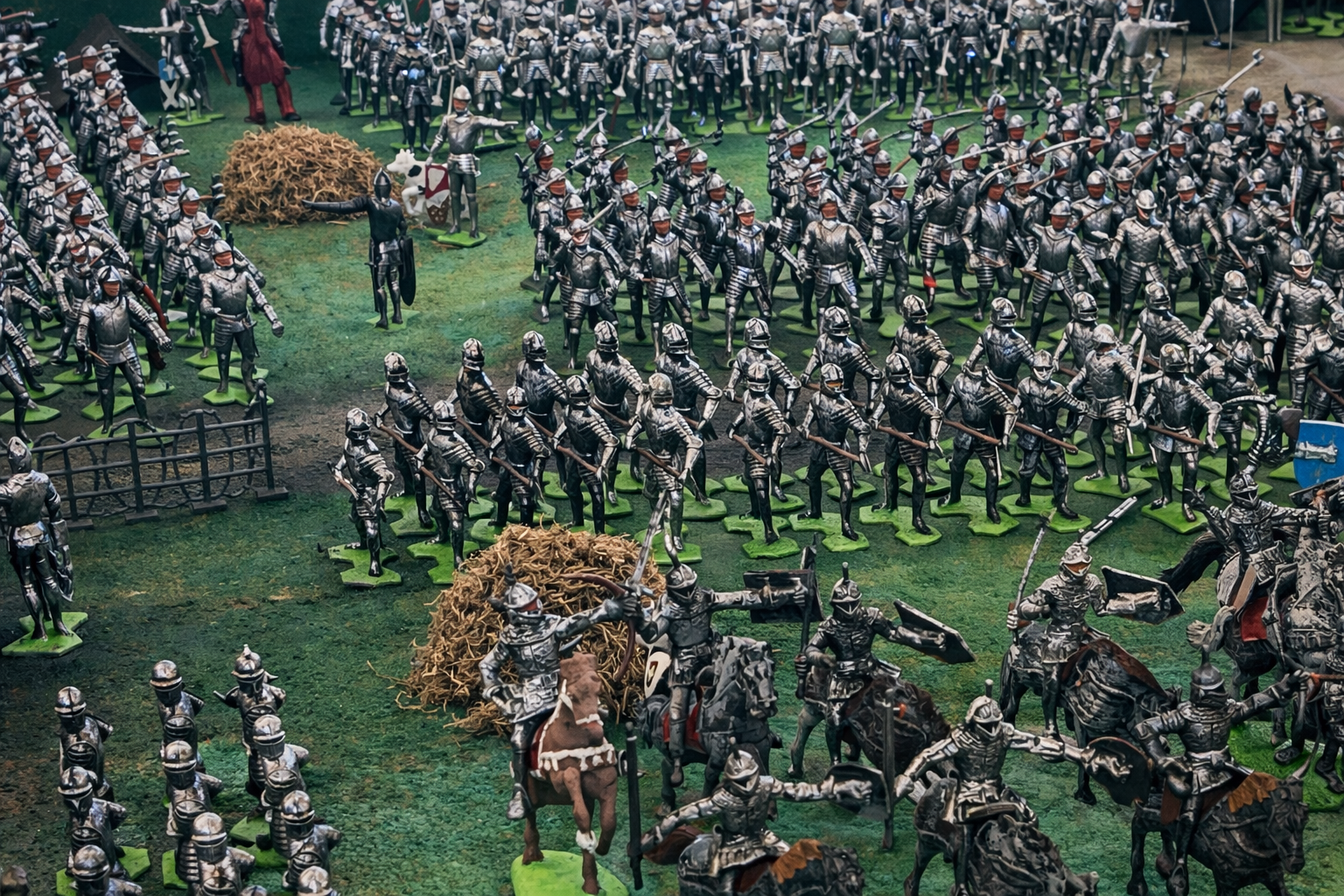
The remaining French formations watch in disbelief as the initial charge begins to resolve without clear dominance, causing uncertainty and restlessness to spread through the ranks.
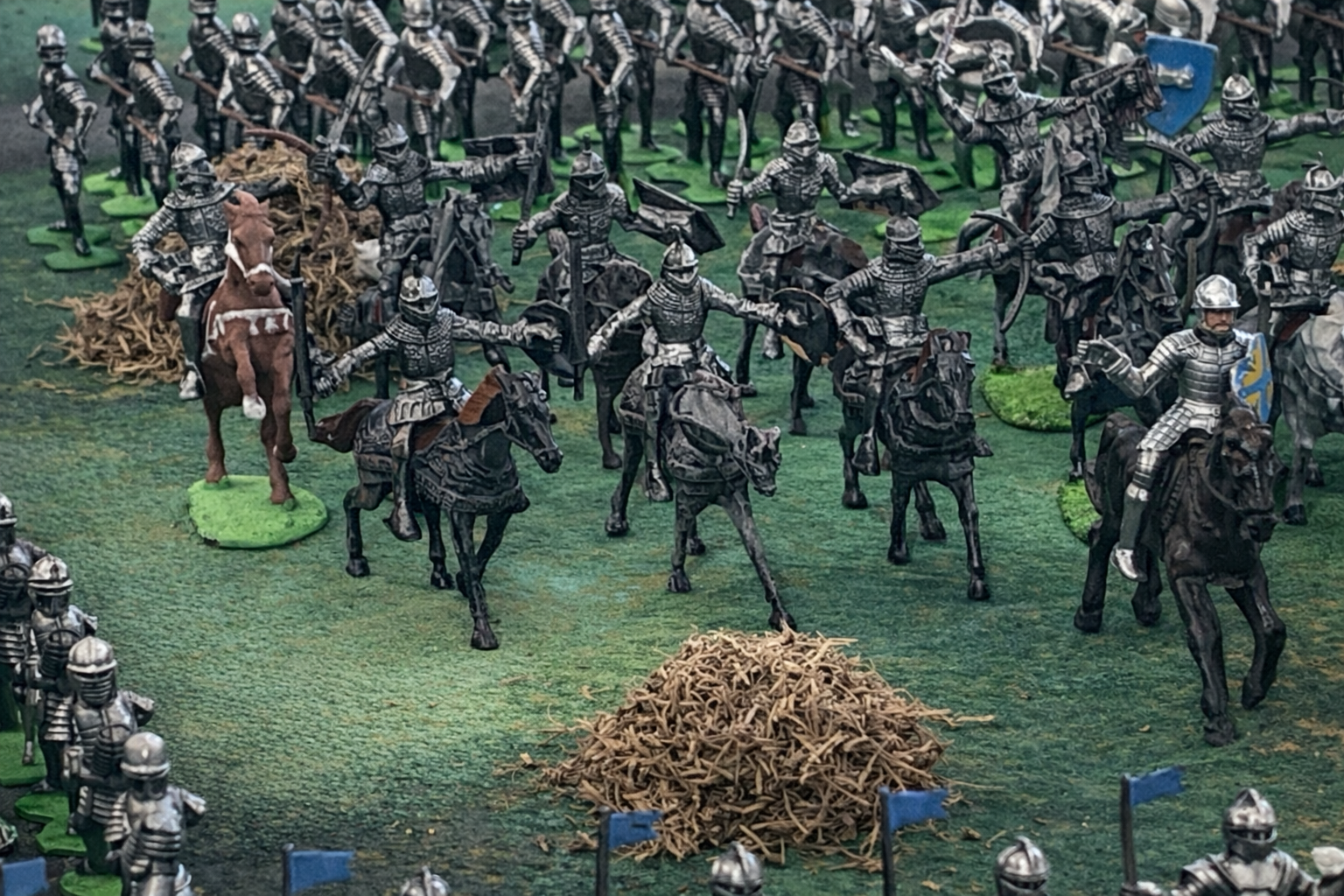
Disorder, fractured leadership, and the simmering hubris of the noble class now push pockets of French cavalry into premature action. Some units surge forward without clear orders, the cohesion of the line unraveling even before the main engagement has begun.
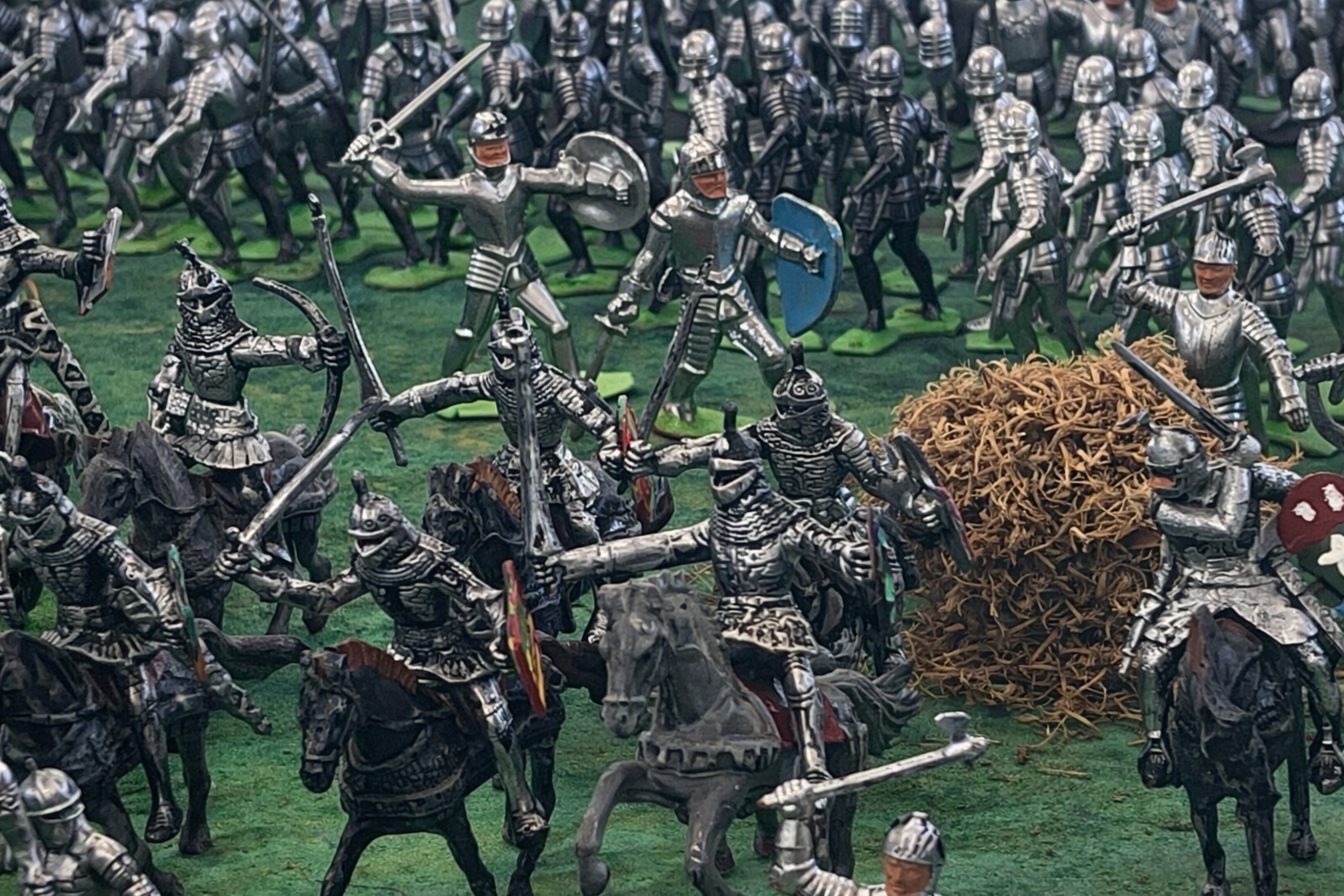
Chaos ensues as successive waves crash into the fray, packing men so tightly together that neither effective combat nor retreat is possible; those in the front are crushed forward, while those behind are pushed into a battle they cannot properly fight.
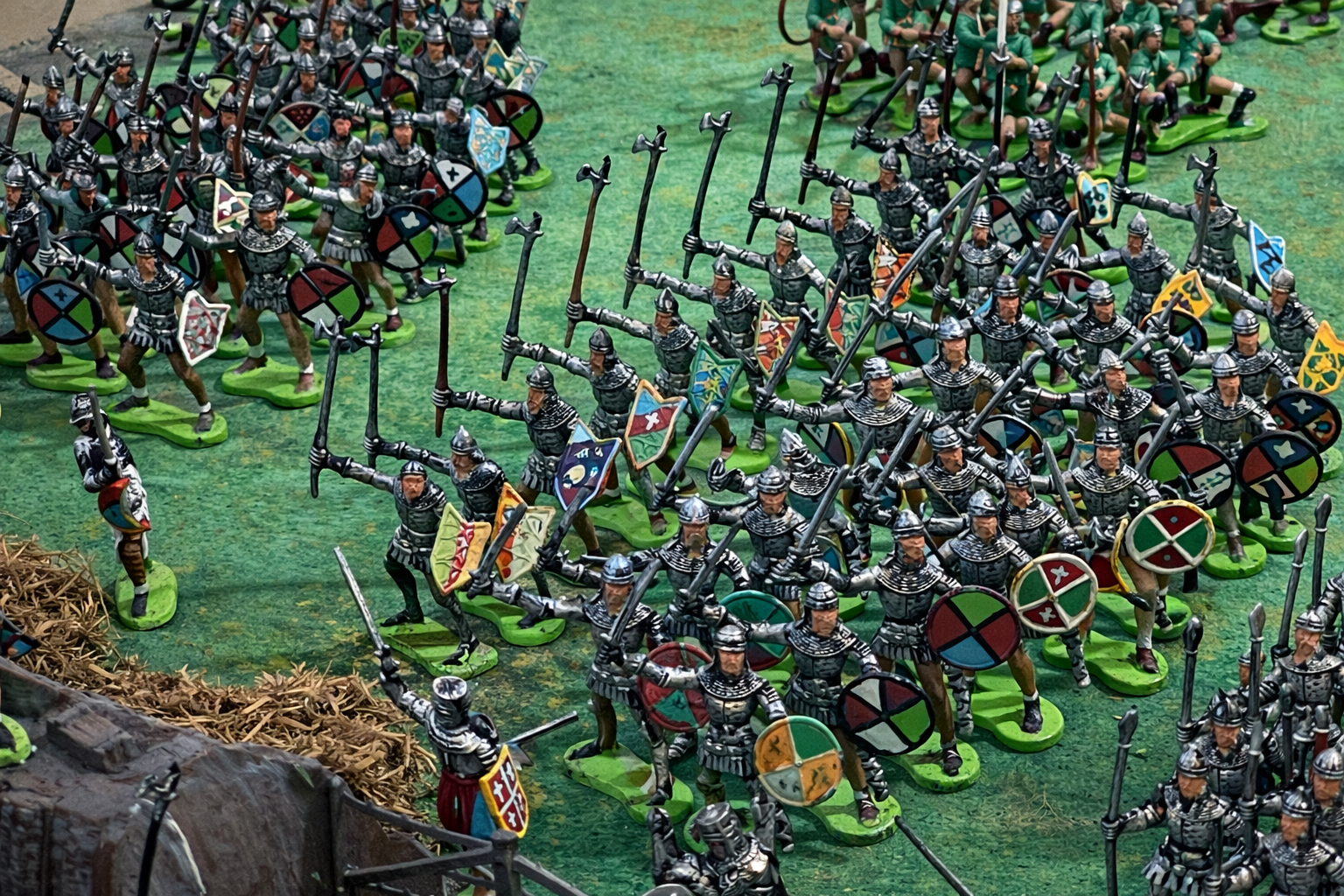
Something in the air shifts; as the French advance stalls and bodies clog the field, the once-impossible suddenly feels attainable. English morale surges, men-at-arms rally forward, and even longbowmen—having exhausted most of their arrows—abandon their stakes to join the melee.
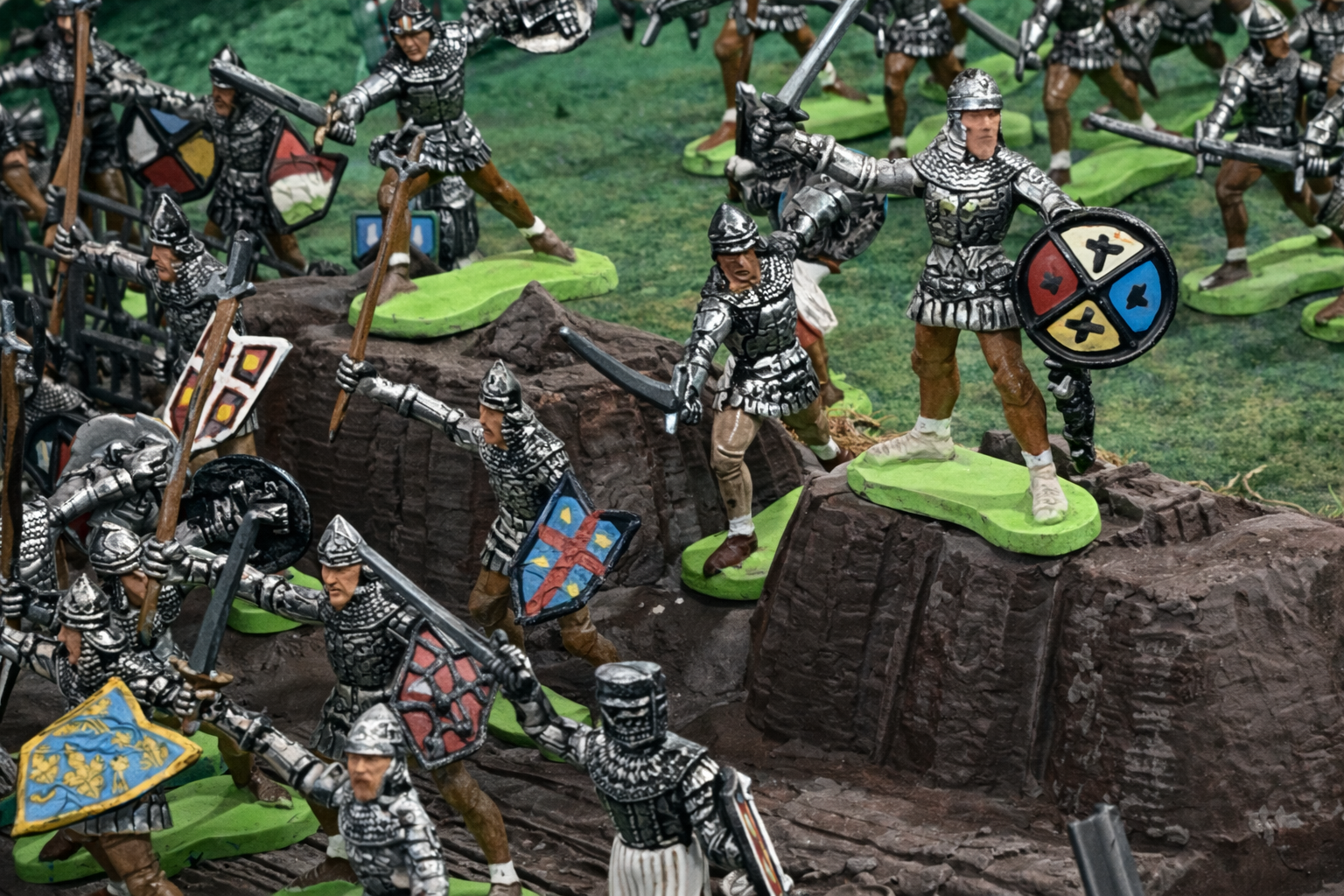
A slaughter follows. Trapped in the mud and crushed by their own advancing ranks, exhausted French knights are cut down like chaff, while renewed English fighters surge forward—turning chaos into rout and sealing one of history’s most improbable battlefield upsets.
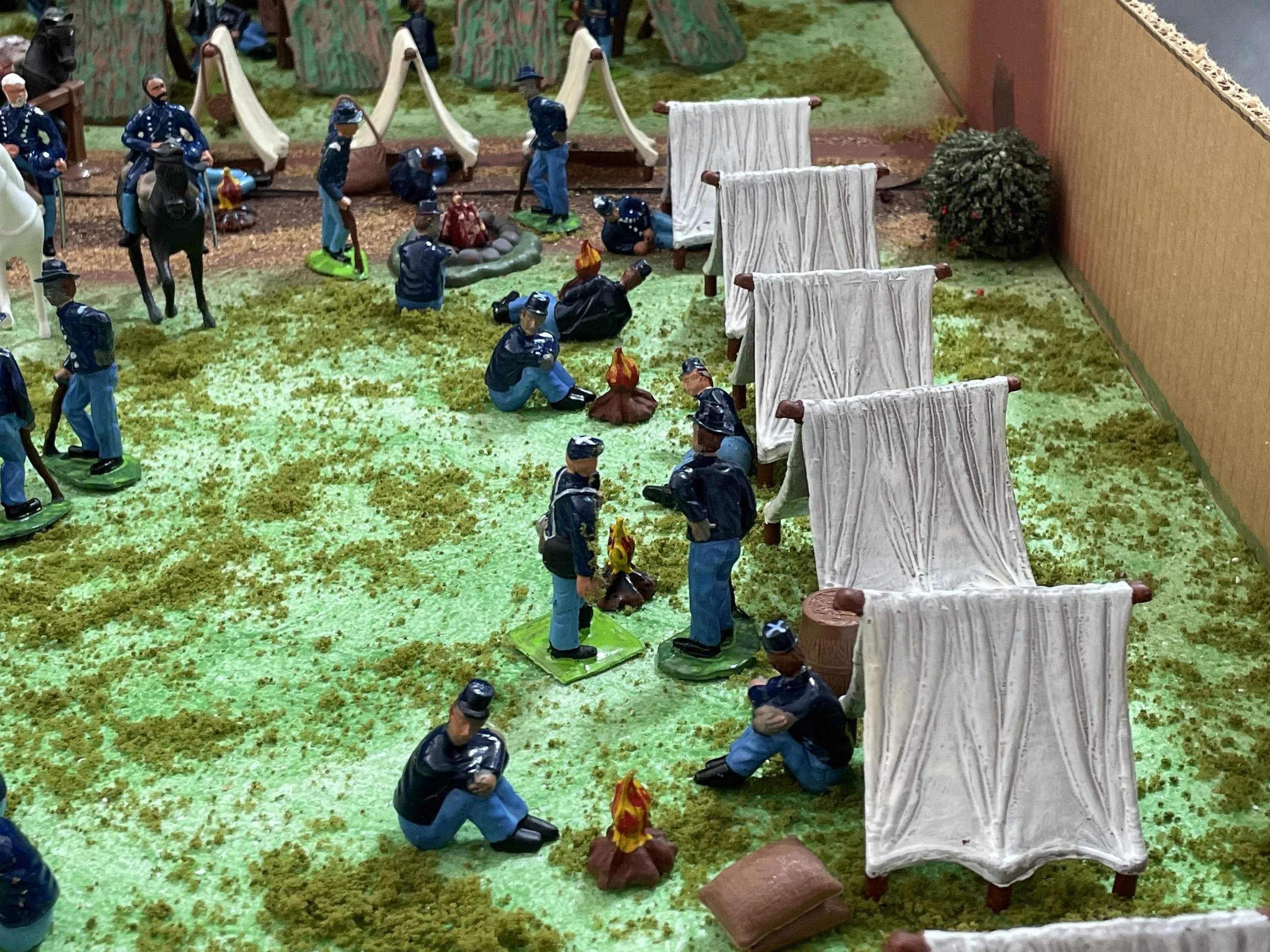
Union camps followed strict layouts: tents aligned in orderly rows, officers positioned separately, sanitation placed downhill.
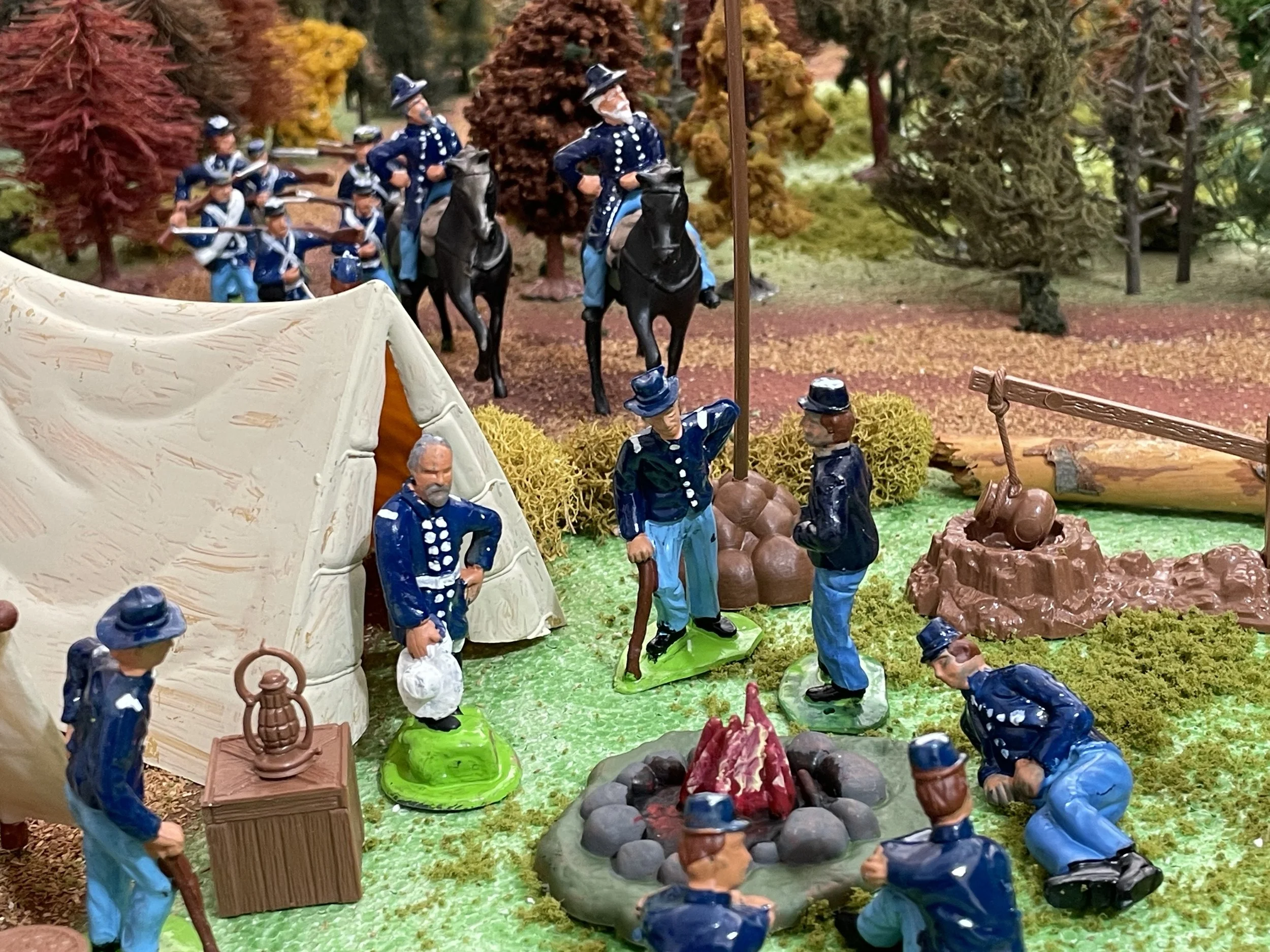
In the foreground, enlisted men gather around the evening fire — the social center of every Union camp. Meals, conversation, and quiet rest unfolded here after long days of drill or march. Behind them, mounted officers stand as a reminder that even moments of routine existed within a war footing.
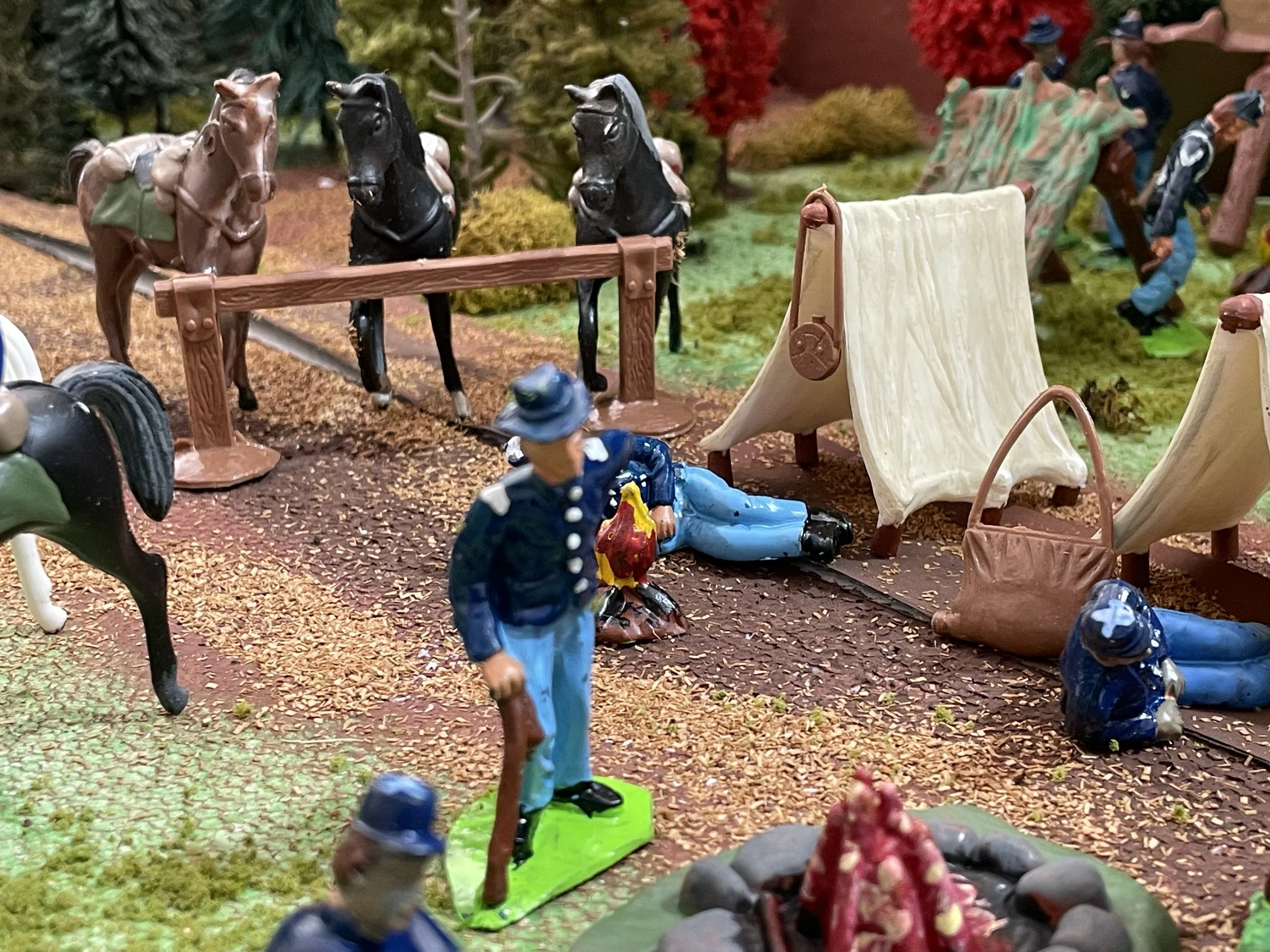
Cavalry horses were tethered in organized lines near camp, ready for rapid movement at a moment’s notice.
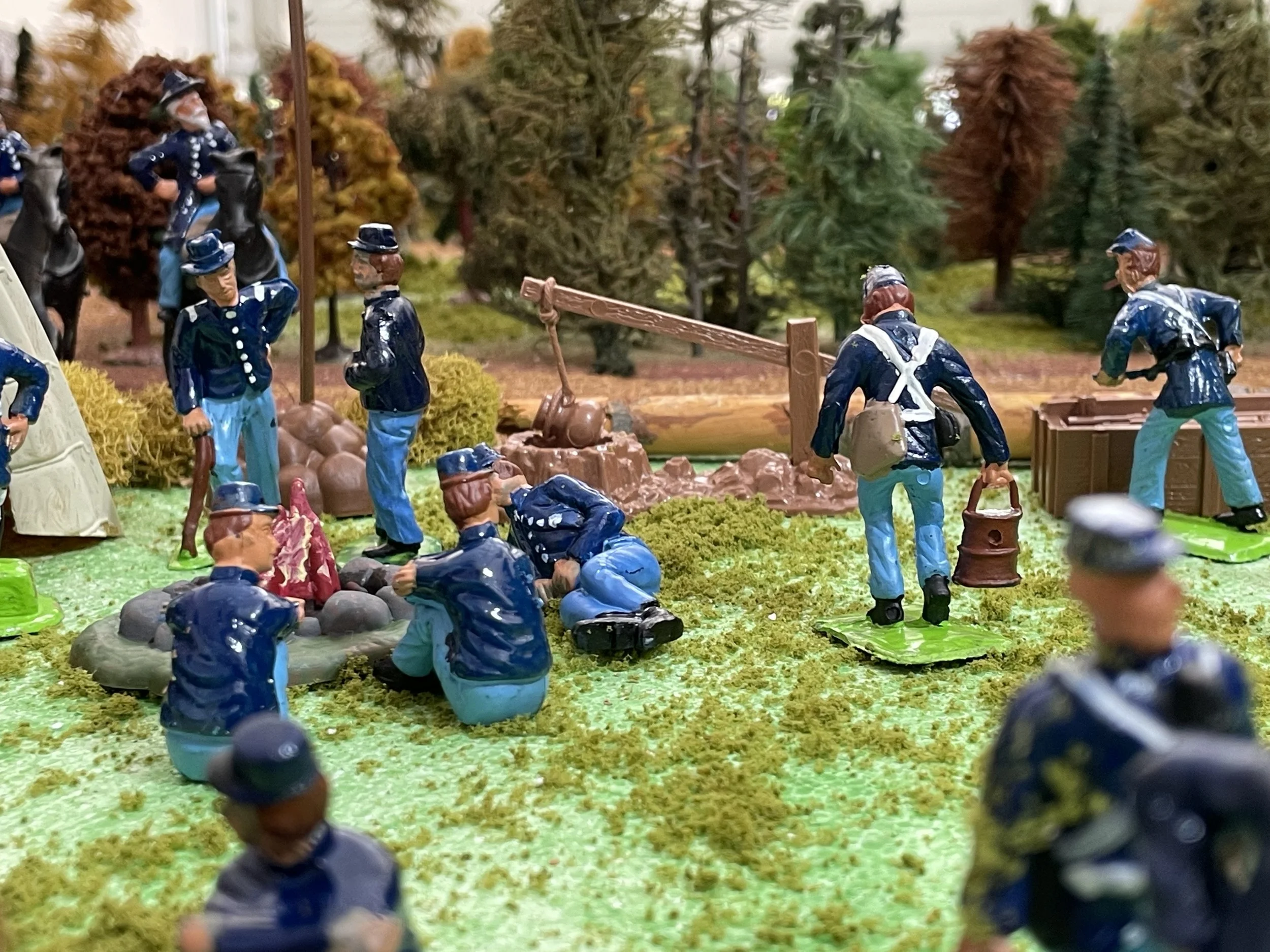
Campfires marked the close of the day’s drill and fatigue duties.
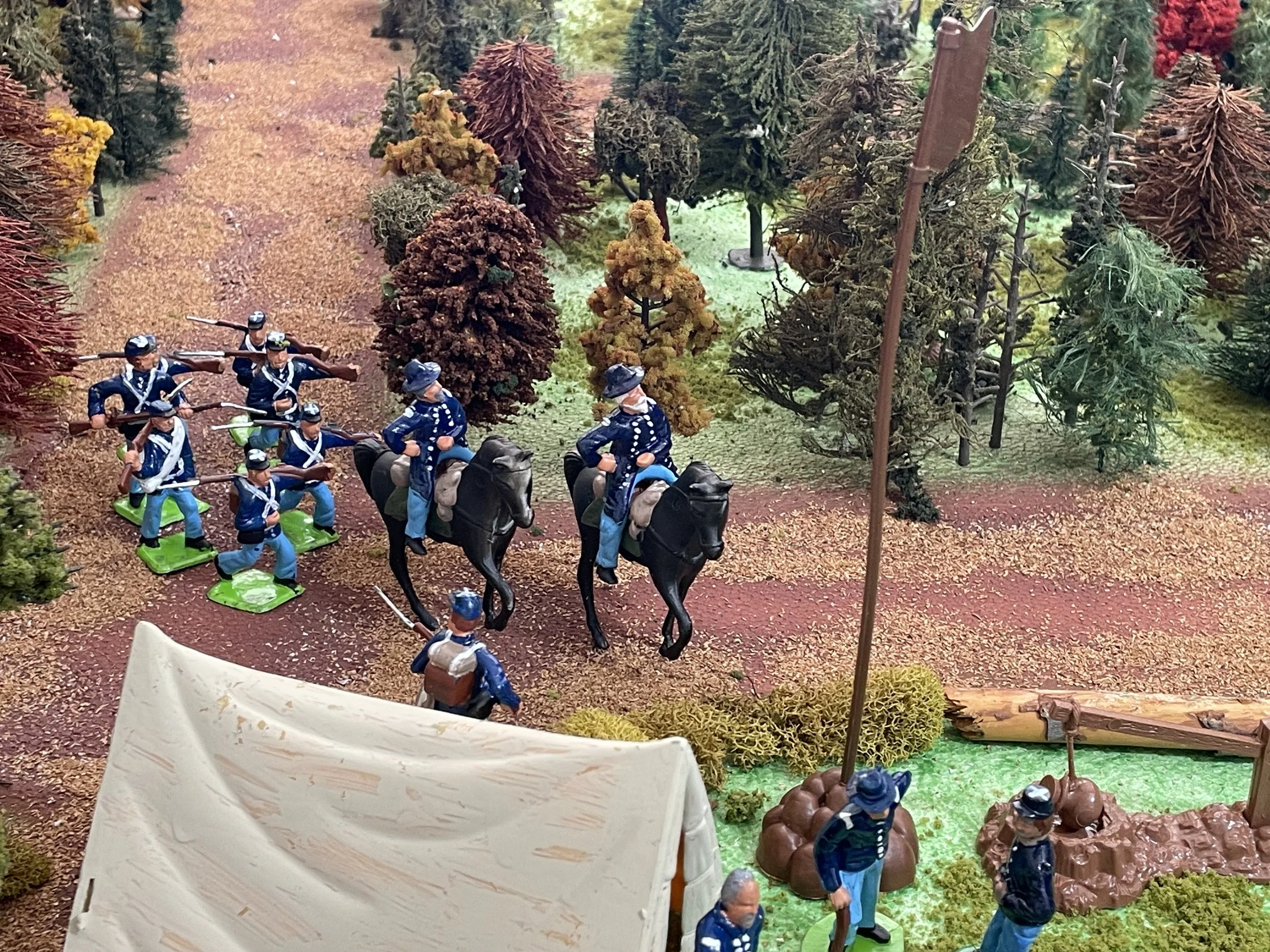
An officer returns from camp with a small escort. Six infantrymen accompany him on foot — close guard, message carriers, and insurance against sudden contact.
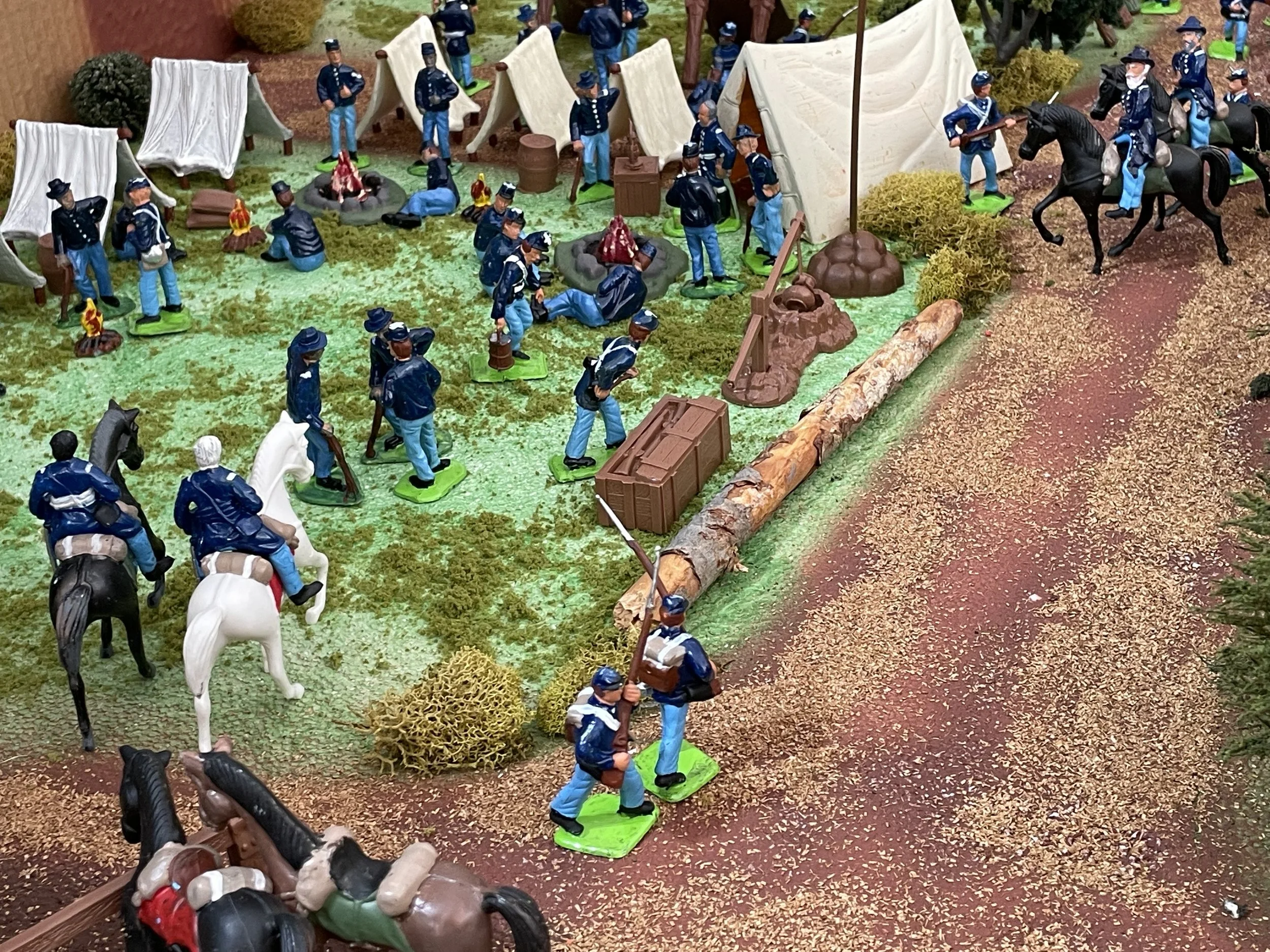
The camp bustles with quiet purpose as dawn approaches. Riders confer near the road, infantry shoulder muskets, and fatigue details move crates and timber into place. Orders have come — whether march, drill, or engagement — and the stillness of night gives way to disciplined motion.
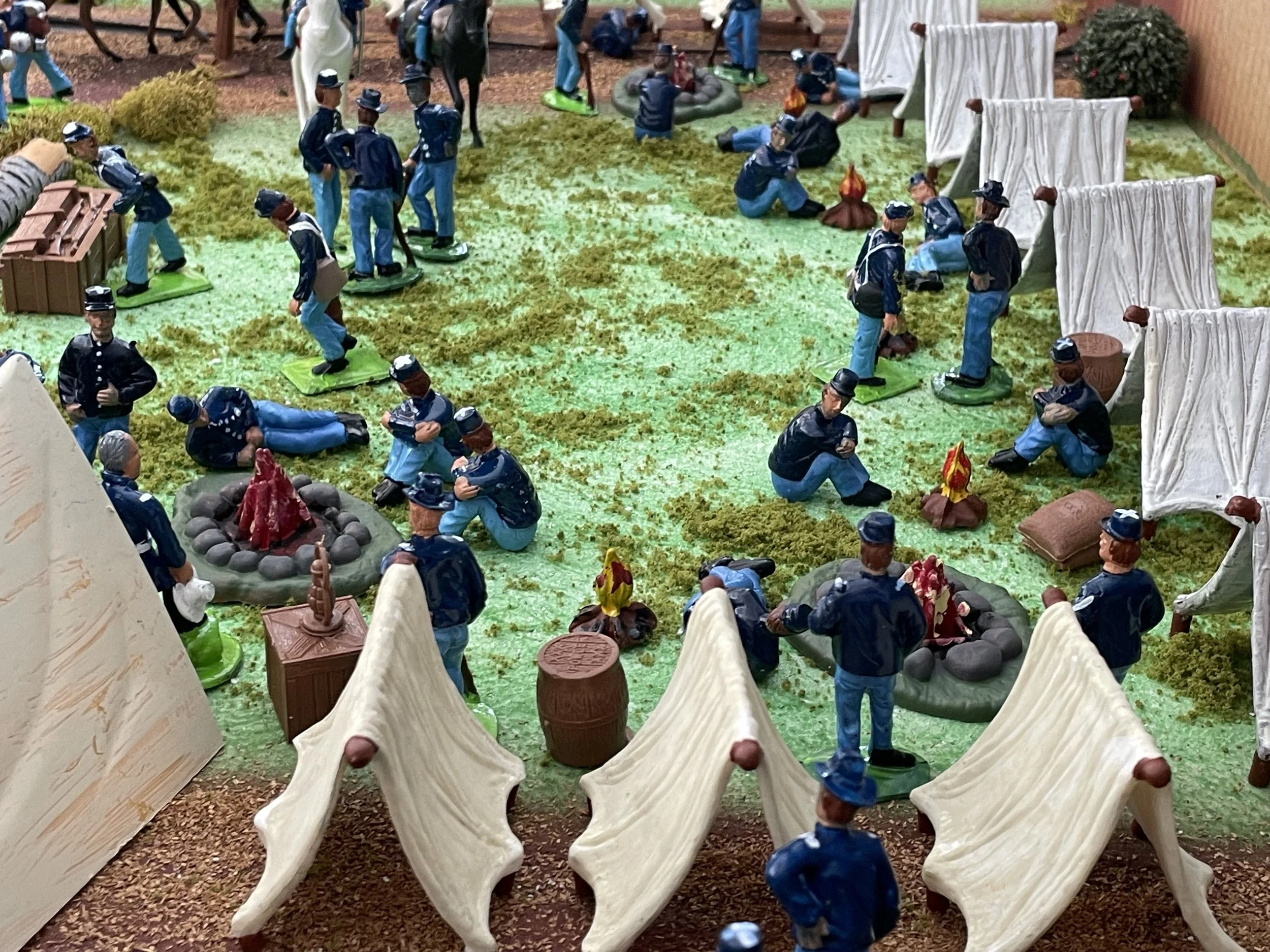
Between marches and battles, soldiers lived in ordered rows of canvas tents known as company streets. Days were filled with drill, cooking, cleaning equipment, and long stretches of waiting. Around shared fires and simple routines, camaraderie formed — the quiet foundation of endurance in a prolonged war.
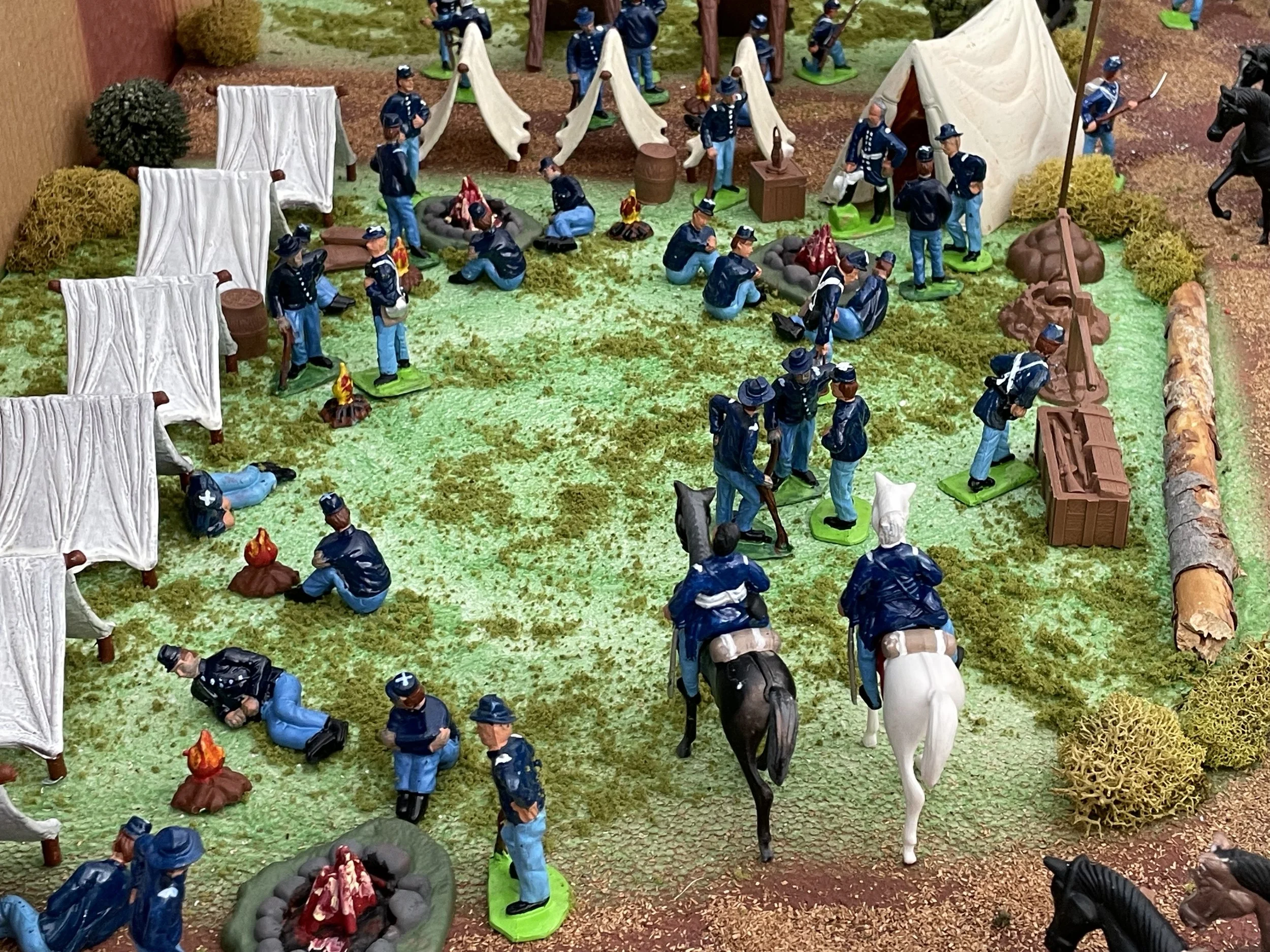
As officers ride slowly through the lines, camp life continues around them — men warming rations, cleaning muskets, or resting between duties. Mounted inspections were routine, a visible reminder of discipline and readiness. Even in quiet hours, the army remained under watch.
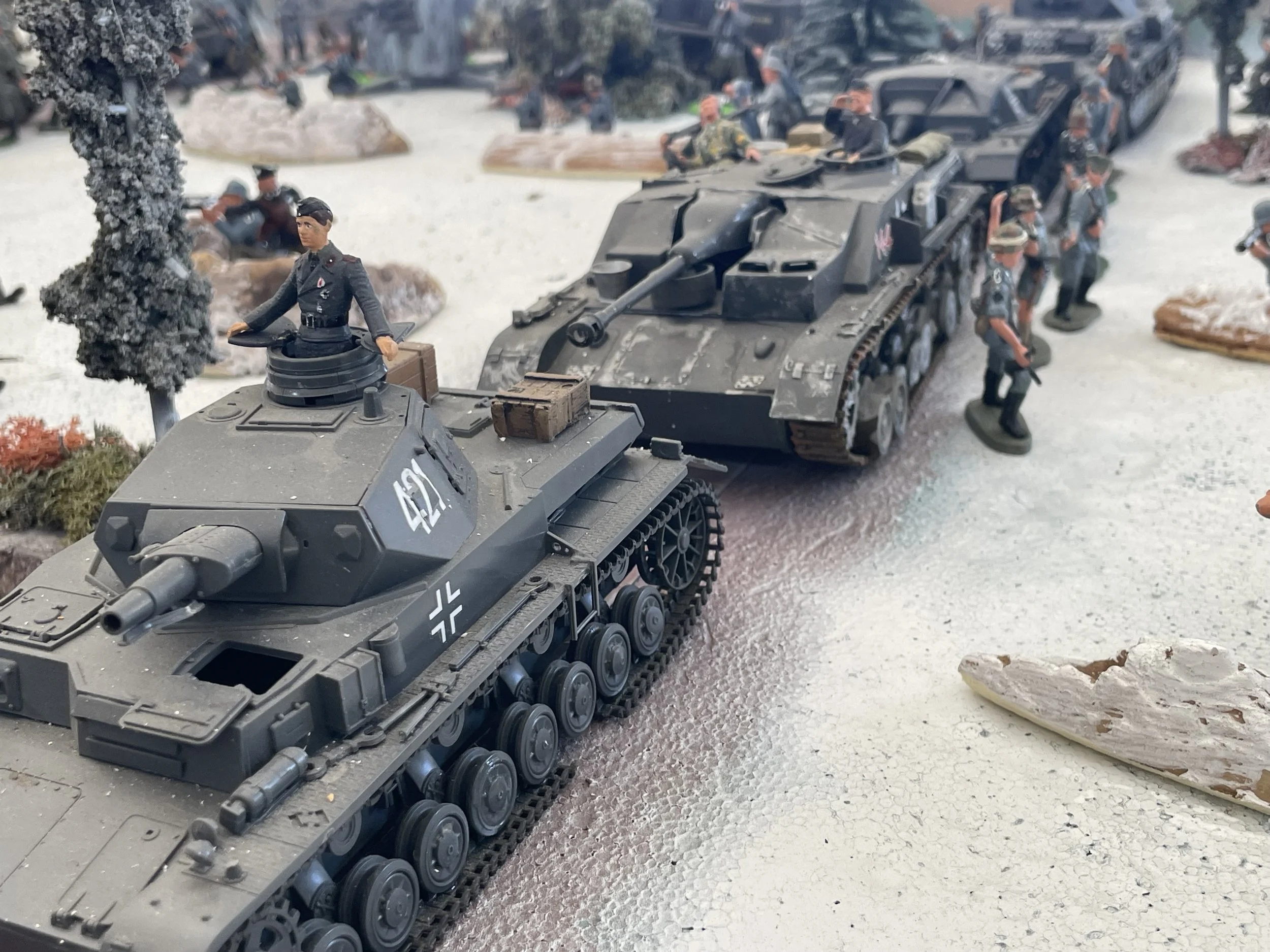
Axis forces mobilize along the winter roads, pushing south from the Belgorod sector toward Kharkov as the next assault gathers momentum. Armor, infantry, and supporting vehicles move in column, reflecting the rapid concentration of forces that marked the fighting around the city.
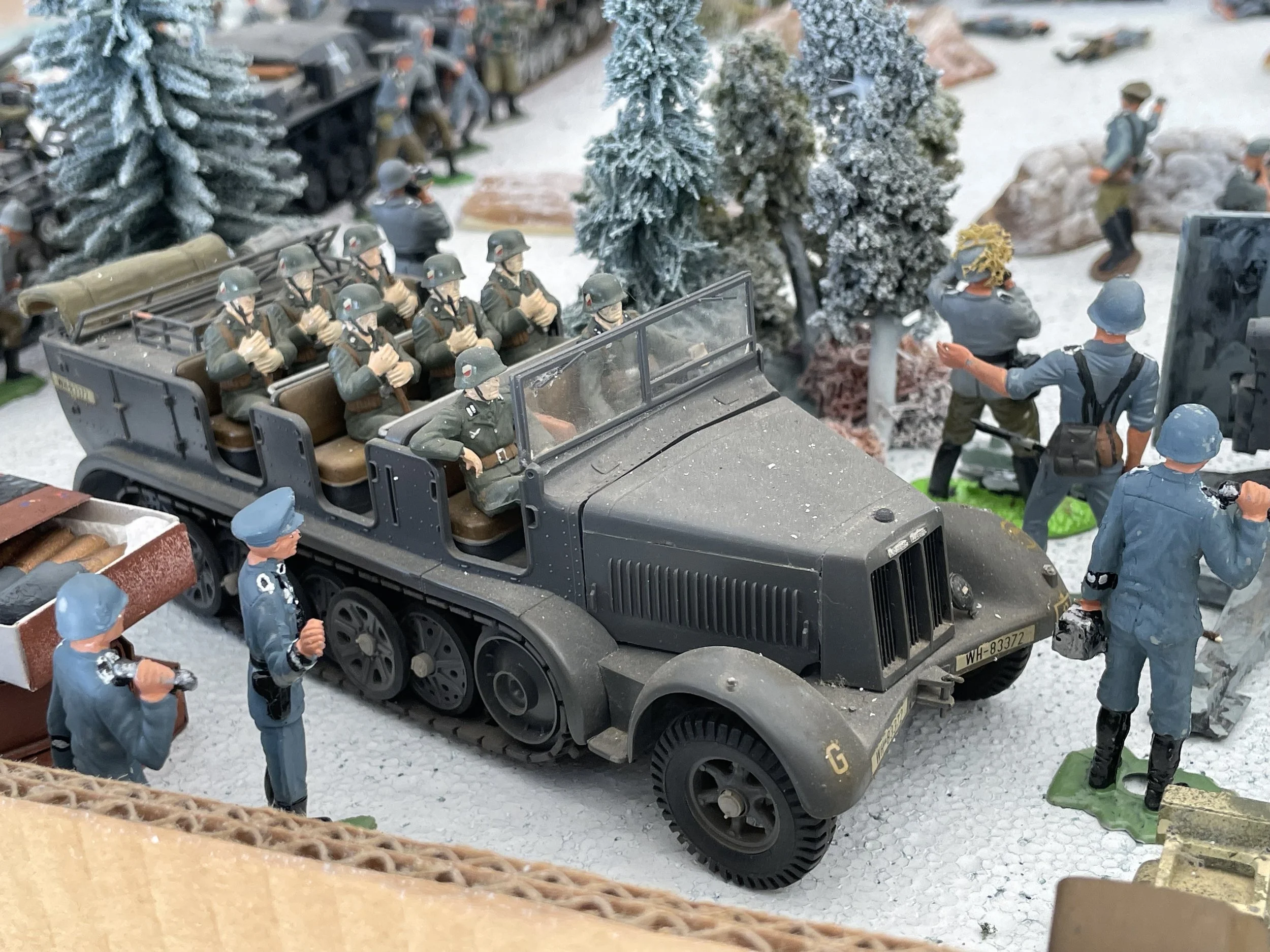
With the perimeter secured, senior personnel arrive at the forward position to begin a preliminary on-site assessment. Troops dismount under winter cover as commanders and staff gather the first reports before the next phase of the advance on Kharkov.
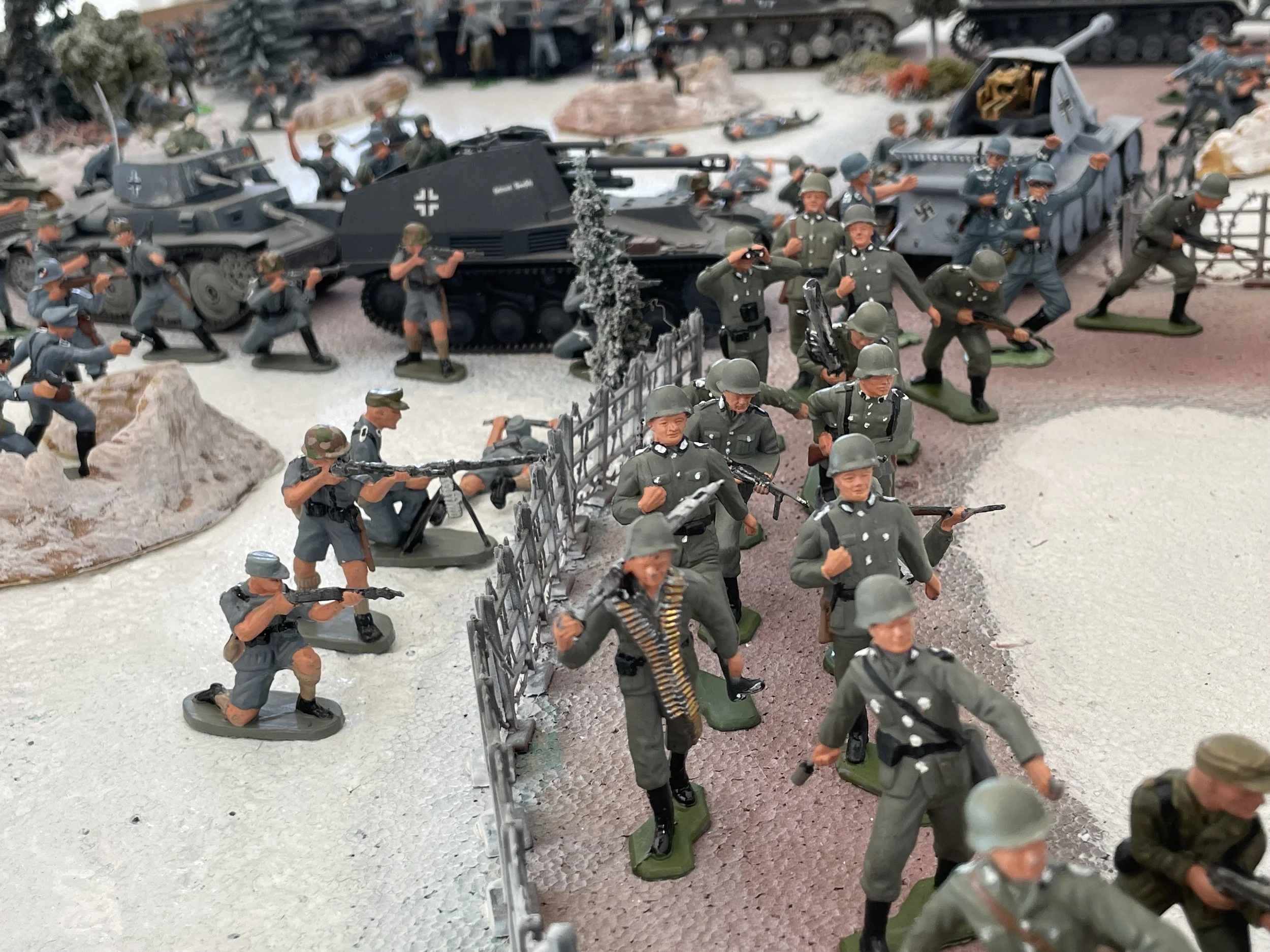
Assault forces move into position as the leading columns prepare to penetrate the outskirts of Kharkov. In the brief stillness before the attack, men and machines gather under palpable tension—the final calm before the storm breaks over the city.
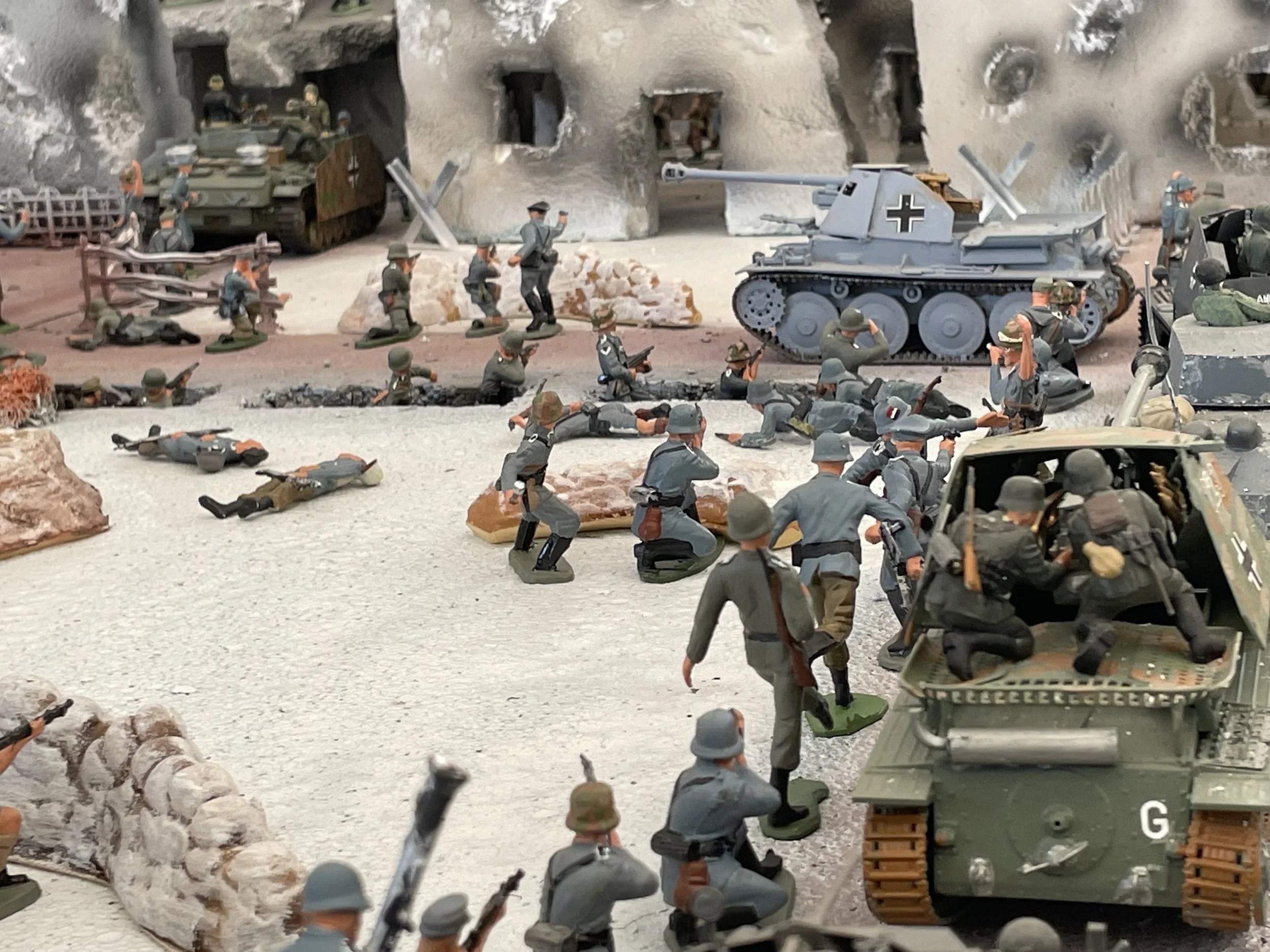
Even with strong German pressure on the approaches, every entry into Kharkov was bitterly contested. Street by street and strongpoint by strongpoint, the advance came at a cost as casualties began to mount almost immediately.
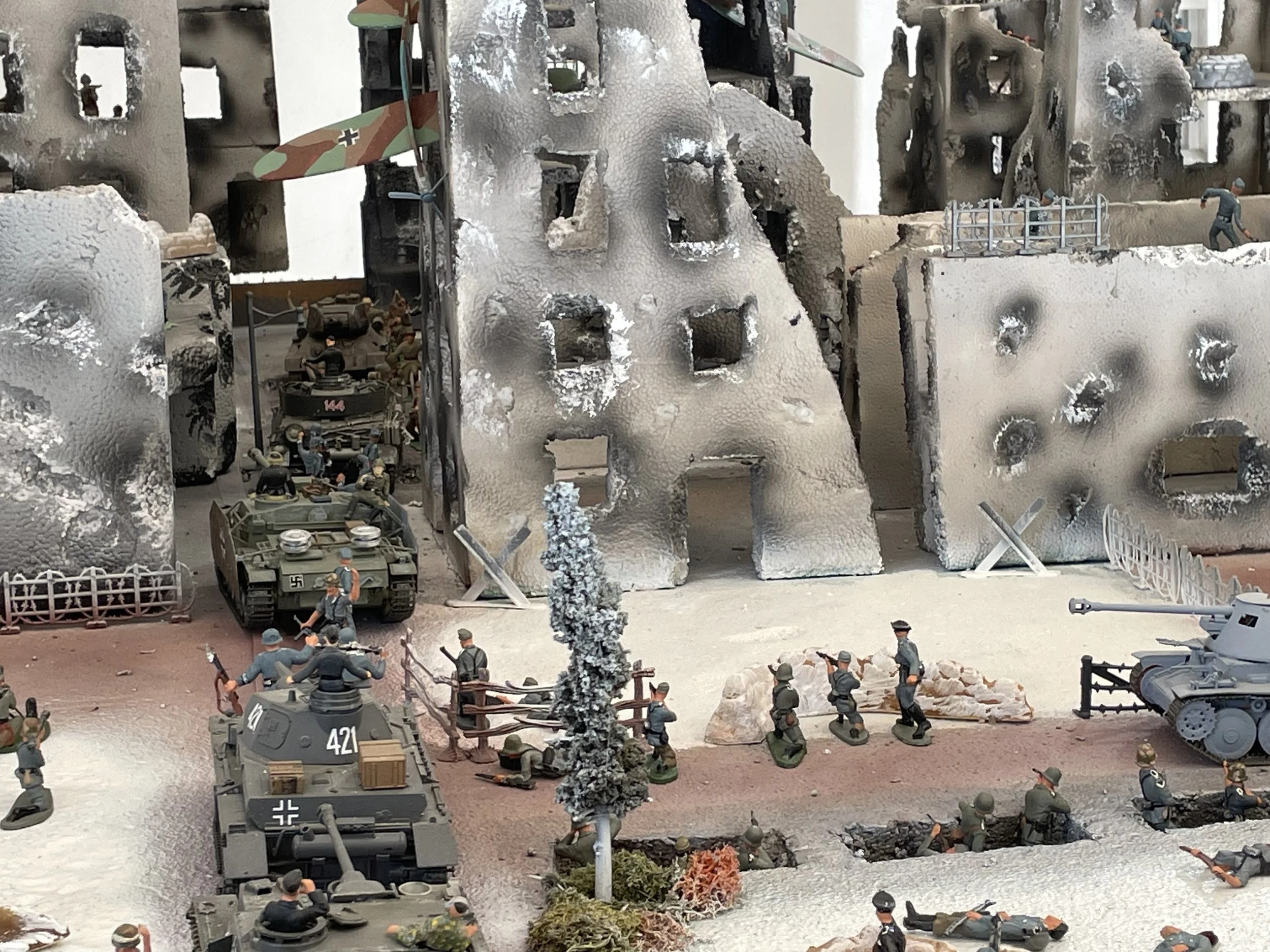
A central armored thrust, closely supported by infantry, pushes into the shattered streets of Kharkov only to meet immediate Soviet resistance. Even amid the ruins, defenders contest every approach, turning the advance into a brutal fight for each block.
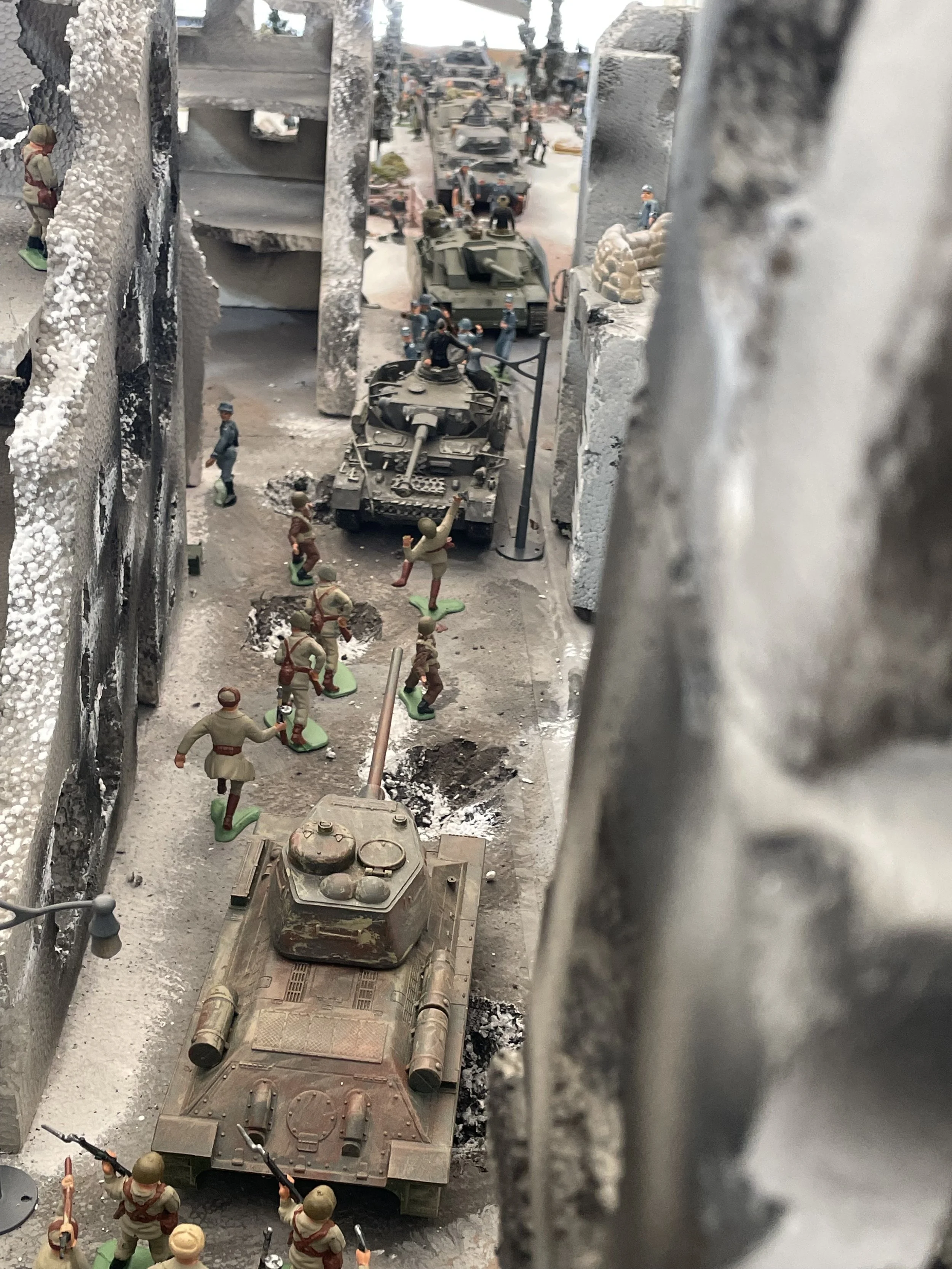
Inside the city, narrow streets and ruined choke points quickly turn the advance into a bottleneck. Armor and infantry crowd the same shattered avenues, and the assault begins to lose momentum in a grinding urban stalemate.
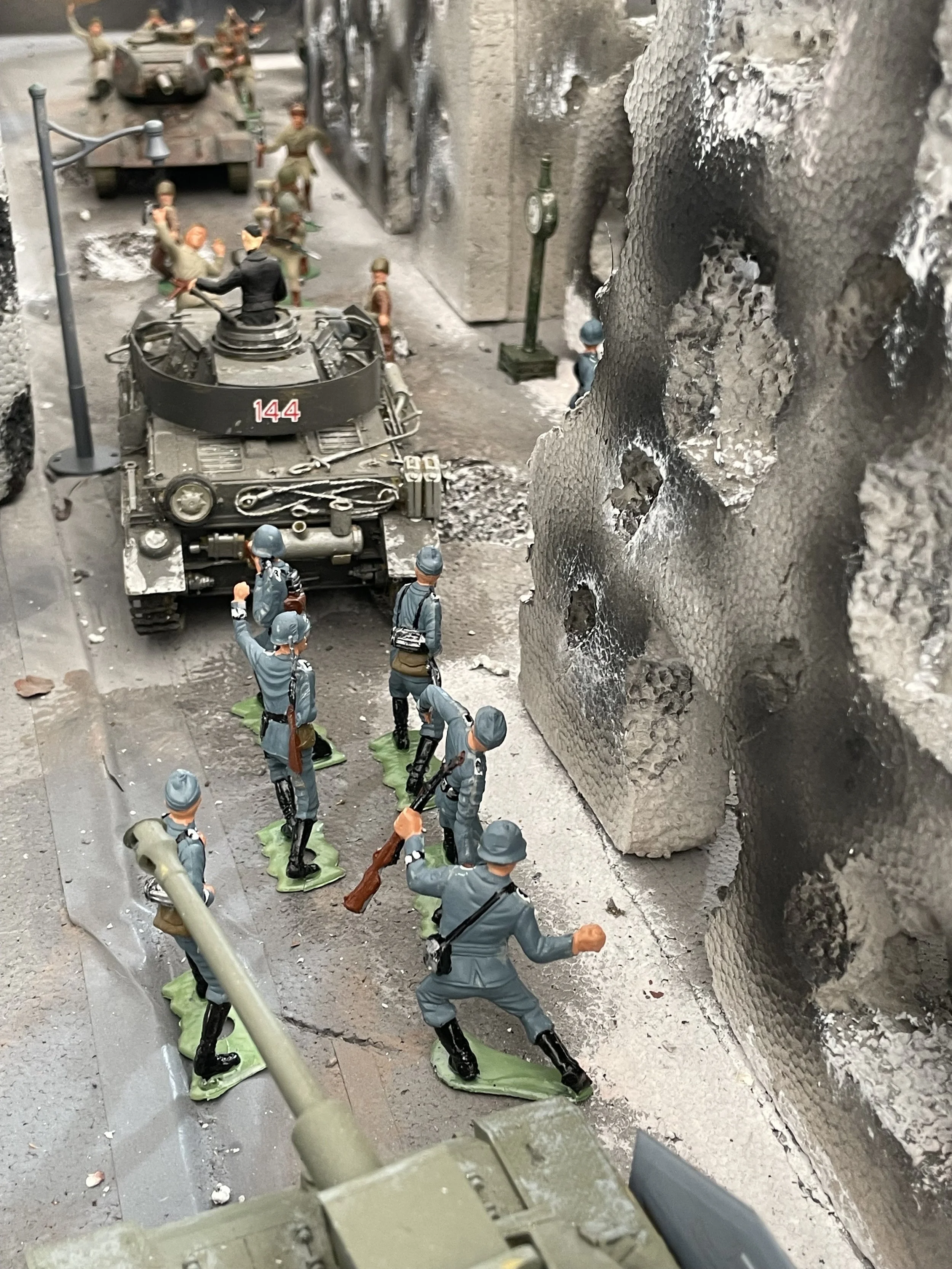
In Kharkov’s shattered streets, individual units were forced to fight at close range in terrain that erased many of their normal advantages. Cramped approaches, limited visibility, and the confusion of urban combat narrowed the battle into a series of violent, localized clashes.
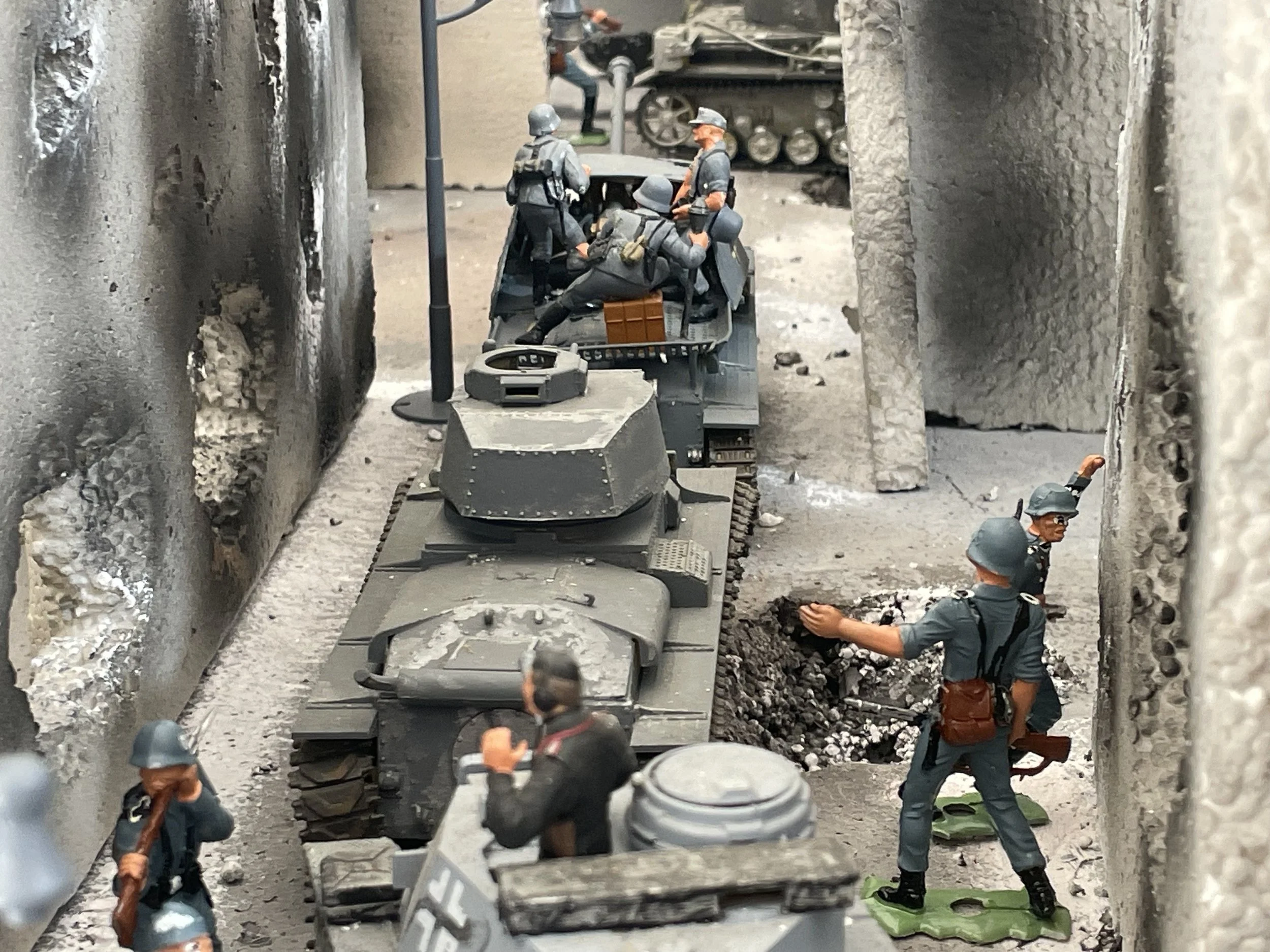
In the maze of Kharkov’s narrow streets, communication and control quickly broke down under combat conditions. Every intersection became a decision point, as small units were forced to react in real time amid rubble, confusion, and the constant threat of fire from unseen positions.
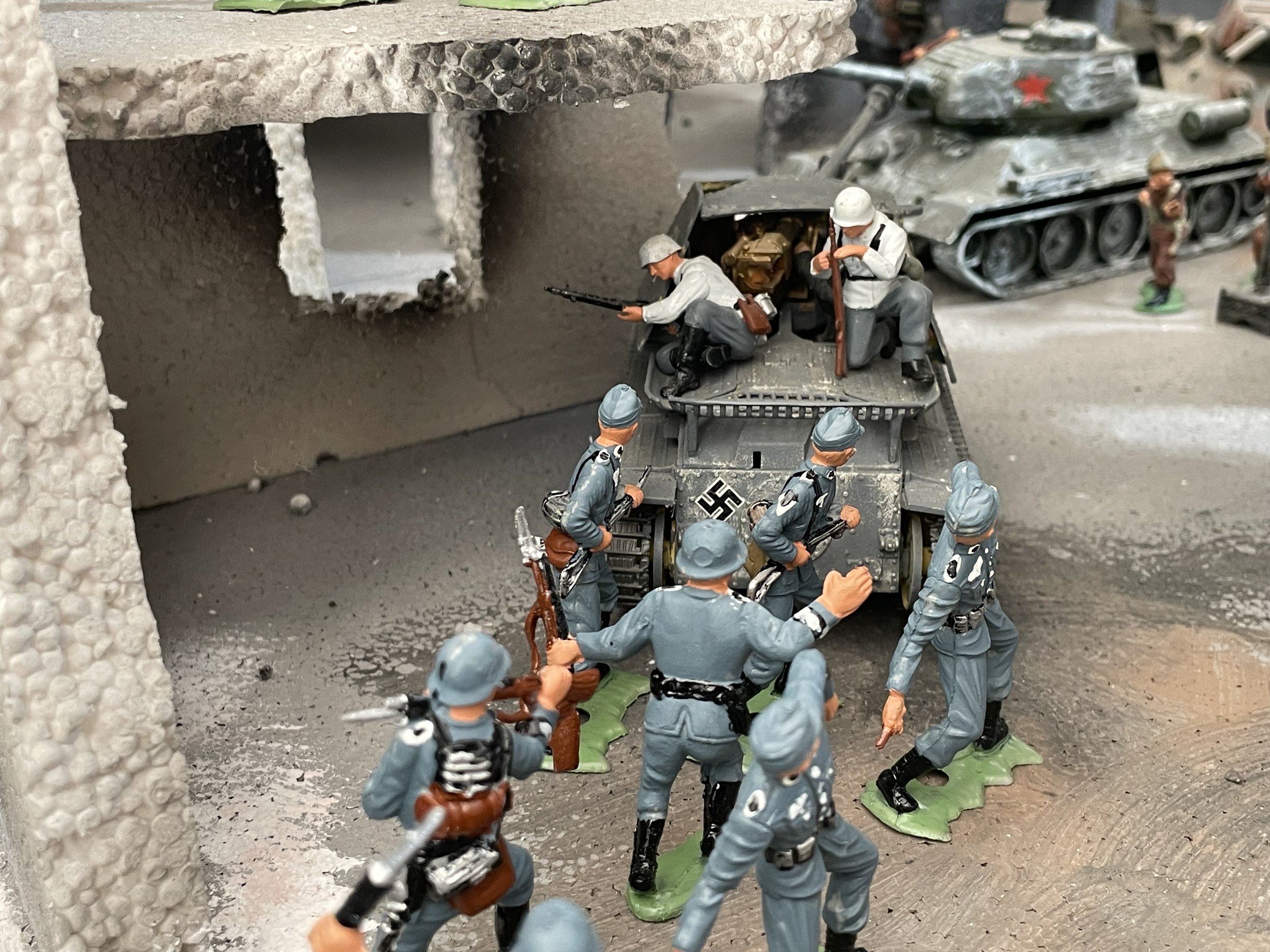
German troops seize the moment as an overextended Soviet armored element is caught in the open amid the ruins of Kharkov. In the confusion of close urban fighting, isolated vehicles could quickly become vulnerable when they pushed ahead without firm infantry support.
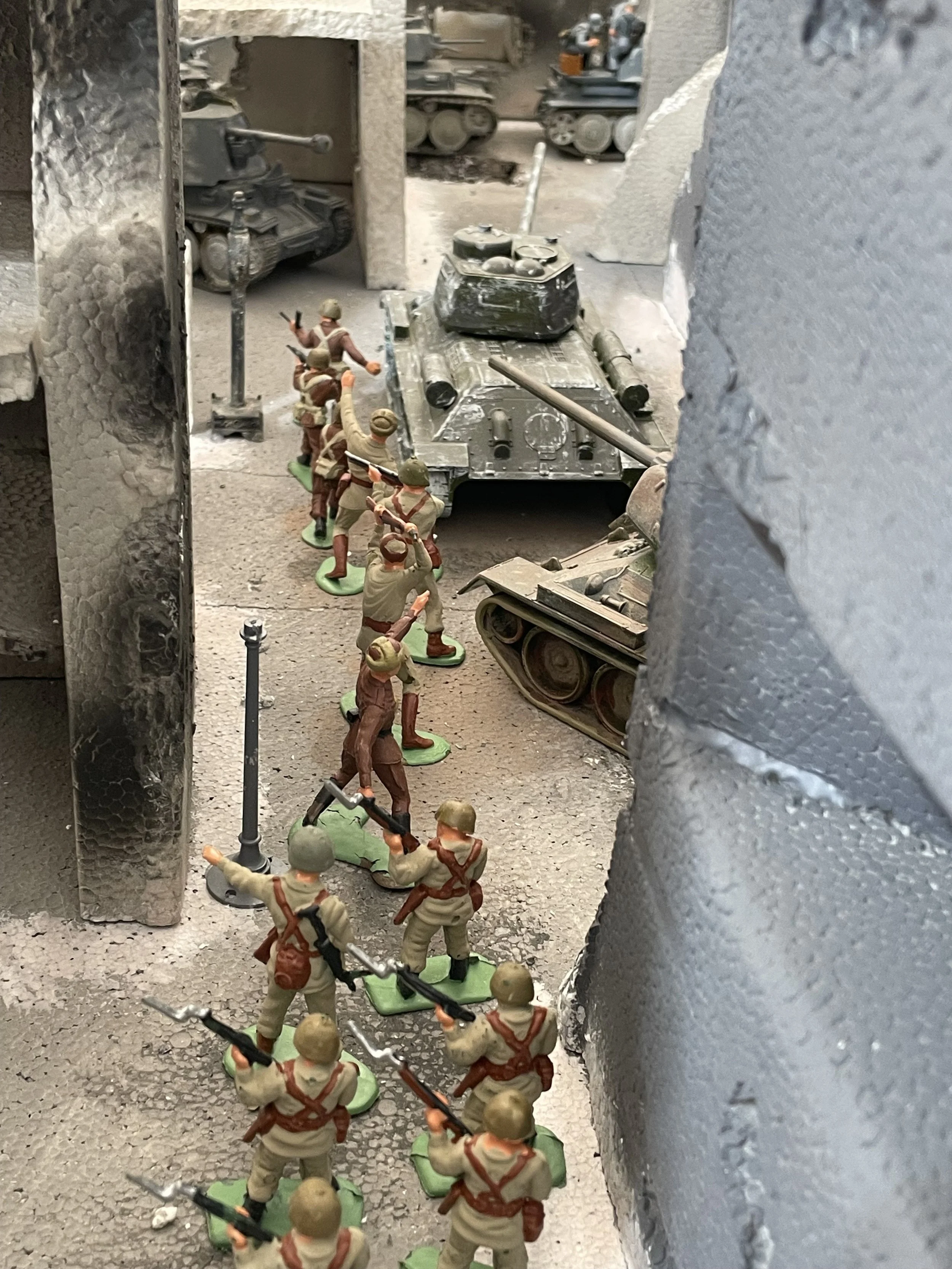
Kharkov’s twisting streets and shattered building lines created countless opportunities for ambush. In such close urban terrain, armor advancing without clear sightlines or secure flanks could be surprised at almost any turn.
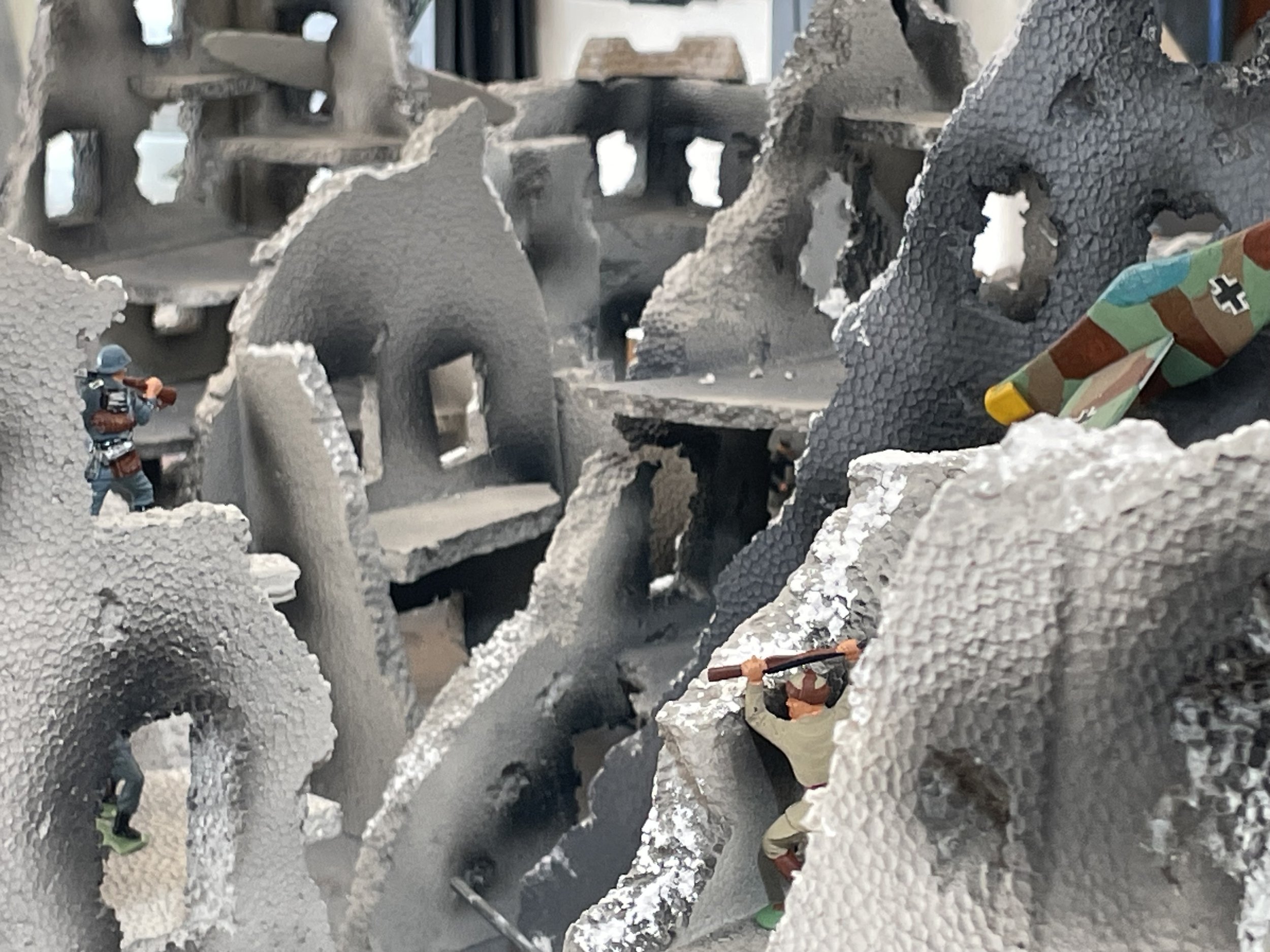
By the end of the fighting, large sections of Kharkov lay in ruins, its streets and buildings scarred by repeated battles and occupation. The destruction seen in the city was cumulative, the result of multiple campaigns that turned Kharkov into one of the most heavily damaged urban centers on the Eastern Front.
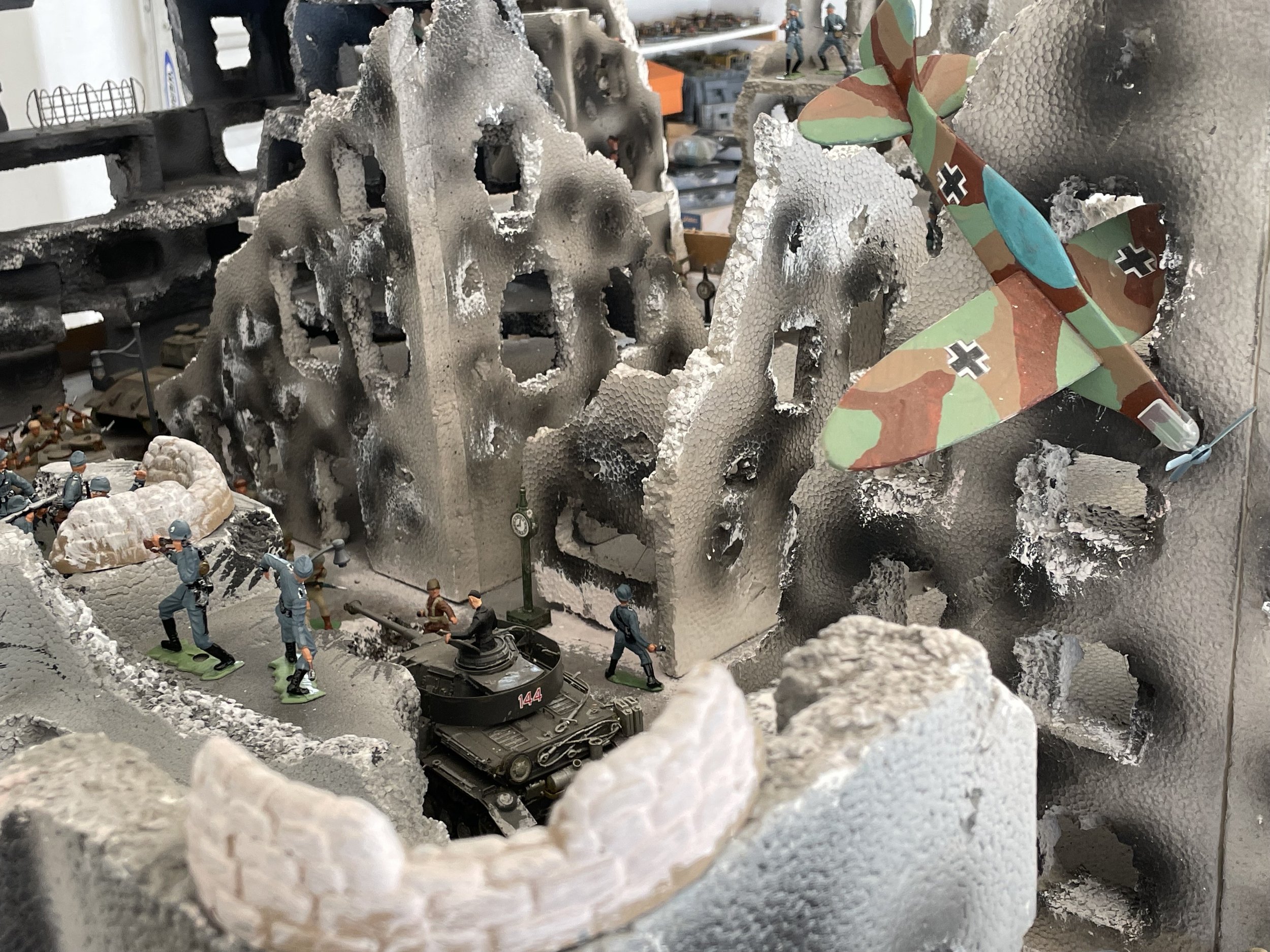
As the battle ran its course, Kharkov’s central districts were left shattered, with whole blocks reduced to burned-out shells and rubble. Repeated fighting through the same urban ground transformed the city into a landscape of ruins long before the campaign was over.